LEGO Display Cases: Protect Your Collection
Protect your valuable LEGO sets from dust and damage with a BrickZoneHub LEGO display case. Discover why collectors choose premium acrylic cases for long-term preservation and stunning visual appeal.
Your LEGO collection represents years of investment, patience, and passion. You've carefully selected each set, admired the intricate details, and proudly displayed your builds on shelves throughout your home. Yet within weeks of display, dust settles on the bricks, fingerprints smudge the minifigure faces, and a single careless bump threatens thousands of dollars in collectible value.
BrickZoneHub's LEGO display cases have emerged as the go-to choice for collectors seeking both protection and visual impact. These transparent acrylic enclosures do more than shield your bricks from environmental damage—they transform casual collections into museum-quality displays that command attention on shelves and desks.
Explore BrickZoneHub's LEGO display cases today to protect your collection
Throughout this article, you'll discover the specific features that matter most for preservation, learn how different case types suit different collection styles, explore the investment value versus cost equation, and find practical tips for maximizing both protection and display aesthetics.
The Collector's Dilemma—Why Standard Shelving Falls Short
Common problems with open display
Open shelving exposes your LEGO sets to relentless environmental threats. Dust accumulates on exposed bricks within days, settling into crevices and dulling the vibrant colors that make each set special. Airborne particles embed themselves into minifigure faces, creating a grimy film that's difficult to remove without risking damage to printed details. Pet hair, cooking grease vapors, and household debris all find their way onto unprotected displays.
Why LEGO sets lose value when exposed to environmental hazards
Collectors and resellers understand that condition determines value. A set displayed openly for years loses market appeal compared to an identical set kept in pristine condition. UV light from windows and overhead fixtures fades brick colors gradually—a process invisible day-to-day but devastating when you later compare your sun-exposed set to a sealed alternative. Fingerprints, scratches, and dust particles become permanent features of open displays, directly reducing resale value by 20–40% depending on the set's rarity and original cost.
The difference between casual display and preservation-focused storage
Casual display prioritizes accessibility and immediate visibility. You can grab a set whenever inspiration strikes, modify it, or photograph it without barriers. Preservation-focused storage treats your collection as a long-term investment. It acknowledges that most modern LEGO sets appreciate in value over time, especially limited editions and retired themes. Sealed sets in mint condition command premium prices in the collector market, making protection a financial decision rather than merely an aesthetic one.
How collectors balance accessibility with protection
The ideal solution doesn't eliminate access—it controls it. Display cases allow you to view your collection continuously while maintaining its condition. You can observe intricate architectural details, admire minifigure variations, and appreciate your builds without handling them constantly. For sets you rotate seasonally or photograph regularly, cases with removable or hinged lids provide quick access without compromising long-term preservation.
Real-world scenarios where display cases prevent costly damage
Consider a collector with a $400 modular building set displayed openly on a bookshelf. A visiting child reaches up to touch it, knocking it to the floor. Pieces scatter, and several rare minifigures are damaged. The set's value plummets to $200. In a case, that same accident causes no damage whatsoever. Another scenario: a collector in a sunny climate displays sealed sets on a window shelf. After three years, box colors fade noticeably while identical sets stored in cases remain vibrant. When selling, the cased versions command $50–100 more per set. These aren't hypothetical—experienced collectors report such incidents regularly.
Understanding BrickZoneHub Display Case Materials and Construction
Clear acrylic advantages over polycarbonate and glass alternatives
BrickZoneHub prioritizes clear acrylic for their standard display cases, and for good reason. Acrylic offers superior clarity compared to polycarbonate, which can develop a slight haze over time. It's also more scratch-resistant than polycarbonate when properly treated, and far less fragile than glass. Acrylic provides excellent UV filtering options in premium models without the weight and breakage risk of tempered glass. It's more affordable than glass alternatives while maintaining the museum-quality appearance collectors demand.
Why transparency matters for showcasing intricate builds and minifigures
LEGO sets are three-dimensional artworks designed to be viewed from multiple angles. A display case with inferior clarity obscures the fine details that make your collection special. The graduated shading on a minifigure's face, the subtle texture variations on modular building facades, and the intricate brick layering that defines architectural sets—all these elements deserve to be seen clearly. Premium acrylic maintains crystal-clear visibility from all viewing angles, ensuring your builds look as impressive in their case as they do in hand.
Stackable design benefits for growing collections
Most collectors don't stop at one set. Stackable cases let your display grow vertically without consuming additional shelf space. Magnetic or snap-fit connections keep stacked cases secure and aligned, preventing the wobbling that compromises stability. As your collection expands, you can add cases incrementally rather than investing in one large expensive enclosure. This modular approach also allows you to rearrange your display seasonally, rotating featured builds and refreshing the visual impact of your space.
Magnetic versus snap-fit lid mechanisms
Magnetic lids offer seamless, gap-free closure with a satisfying click that signals a secure seal. They're easier to open repeatedly without risk of misalignment, making them ideal if you plan to access your cases frequently. Snap-fit lids cost less to manufacture, reducing the price point of entry-level cases, but they require precise alignment to close properly. Over time, repeated snapping can wear the connection points, potentially compromising the seal. For premium cases you'll open regularly, magnetic mechanisms justify their higher cost. For display-only cases, snap-fit suffices if quality control is solid.
UV-resistant panel technology and its role in long-term preservation
UV-resistant acrylic includes additives that filter harmful ultraviolet rays, preventing color fading over years of display. This becomes critical if your cases sit near windows or under bright LED fixtures. Standard acrylic offers minimal UV protection, making it suitable only for interior displays away from direct sunlight. Premium BrickZoneHub cases with UV-resistant panels cost more upfront but preserve brick colors indefinitely, protecting your investment's appearance and resale value. For sealed sets in original boxes, UV protection is essential—the printed graphics on packaging fade visibly under unfiltered light.
Assembly quality indicators that separate premium from budget options
Examine the thickness of the acrylic walls. Thinner material (under 3mm) flexes slightly, allowing dust to enter gaps when the case isn't perfectly sealed. Premium cases use 4–6mm acrylic, remaining rigid and maintaining consistent pressure on lids. Check the fit between the base and walls—premium cases have seamless, flush connections, while budget options sometimes have visible gaps. Inspect the lid's underside for uneven surfaces or burrs that prevent proper sealing. Read reviews specifically mentioning assembly difficulty, lid alignment, and whether cases arrive with protective film intact (indicating careful manufacturing).
Check out premium BrickZoneHub cases with superior construction quality
Sizing Options—Matching Your Collection to the Right Case
Minifigure display cases
Minifigure enthusiasts need compact cases designed specifically for high-density storage. These shallow enclosures, typically 8–12 inches wide and 6–10 inches tall, feature interior shelving or display stands that showcase 20–50 minifigures while minimizing shelf footprint. Magnetic lids are especially valuable here since you'll open these cases frequently to rotate your displayed figures or add new acquisitions. The shallow depth means even large minifigure collections consume minimal space while remaining fully visible.
Small to medium builds
Creator sets, themed collections, and standard-sized builds need cases ranging from 12–18 inches in width and depth, with 10–14 inches of height. These dimensions accommodate everything from the Creator Expert buildings to most Technic sets without excessive wasted space. Multiple sets can stack on shelves when displayed in similarly-sized cases, creating a uniform, organized aesthetic. This size range represents the sweet spot for most casual to serious collectors—large enough for impressive builds, compact enough for reasonable shelf placement.
Large modular sets
The Architecture line, Colosseum, Titanic, and other massive builds demand custom-sized cases or premium large enclosures. These cases exceed 20 inches in width and depth, with heights of 18+ inches. They're heavier and more expensive, but they're essential for protecting your most significant sets. Stackability becomes less practical with these larger cases due to their weight, so plan for horizontal shelf placement. Premium large cases often include adjustable shelving or interior customization options to accommodate various build shapes and dimensions.
Sealed set preservation cases
If you collect sealed sets in original packaging, cases must accommodate the box dimensions plus a small buffer for airflow. Many collectors use flat storage cases that maximize visibility of box artwork while maintaining dust protection. These cases typically measure 24+ inches wide to accommodate original boxes horizontally, with adjustable shelving for different box sizes. The key is maximizing the visual impact of the original packaging while keeping it protected from environmental damage.
Stackable configurations for expanding collections
Plan your display with growth in mind. If you expect to add cases regularly, select consistent dimensions that stack uniformly. Mixed sizes create visual chaos and waste vertical space. Consider how your shelving can accommodate stacking—standard shelves typically support 2–3 cases stacked vertically before appearance suffers. Plan for expansion horizontally across multiple shelves rather than exclusively vertical stacking if you have the space.
Measuring your builds before purchase
Don't estimate. Measure your tallest piece, widest section, and deepest component. Add one inch to each dimension to ensure comfortable spacing inside the case. Account for any interior shelving or stands that reduce usable space. Photograph your builds from multiple angles and bring measurements when shopping, or reference LEGO's official set dimensions if displaying sealed boxes.
The Preservation Advantage—Protecting Your Investment
How dust and airborne particles damage brick condition over time
Dust isn't merely unsightly—it's abrasive. Particles settling on bricks contain microscopic grit that scratches printed details and dulls matte finishes. Fine dust embeds into the studs of vertical elements, making them difficult to clean without potentially damaging the connection points. Over years, accumulated dust creates a permanent patina that can't be fully removed, reducing the set's condition grade from "mint" to "excellent" or lower. This seemingly minor degradation directly impacts resale value in the collector market, where condition grades determine pricing.
Fingerprint resistance and maintaining pristine appearance
Even careful handling leaves fingerprints. Skin oils transfer onto minifigures' faces and light-colored bricks, creating visible smudges that detract from the display and prove difficult to remove. Display cases eliminate this entirely. Your collection remains pristine between viewing occasions, maintaining that fresh-from-the-box appearance that distinguishes high-grade sets from well-handled examples.
Temperature and humidity control within enclosed cases
While cases don't actively climate-control, they buffer against rapid temperature and humidity swings that can damage bricks. Extreme humidity causes printed details to warp or peel. Rapid temperature changes stress plastic connections, potentially loosening pieces. Cases create a microclimate that moderates these fluctuations, especially when placed away from direct heat sources, air conditioning vents, and exterior walls. This passive protection extends brick longevity and preserves structural integrity.
Long-term value retention for resale and collector portfolios
LEGO sets have become legitimate investment vehicles. Retired sets from popular themes appreciate 5–15% annually. Mint condition sets appreciate faster than played-with examples. A $150 set purchased today in a case and maintained for five years might appreciate to $200–250 if kept perfect, or depreciate to $80–100 if displayed openly and handled frequently. That differential compounds significantly when multiplied across a 50+ set collection. For serious investors, display cases aren't expenses—they're capital preservation strategies.
Preventing color fading from natural and artificial light exposure
RGB light damages plastic and printed details. Natural sunlight's UV component fades colors noticeably within 1–2 years. LED fixtures, while safer than incandescent bulbs, still cause gradual fading over extended exposure. Cases with UV-resistant panels eliminate this concern entirely. Even standard cases provide significant protection simply by reducing light exposure to the times you're actively viewing your collection, rather than constant 24/7 exposure on open shelves.
Comparison of preservation outcomes between cased and open displays
Studies comparing cased versus open displays over five years show measurable differences. Cased sets maintain original color saturation, minifigures retain print clarity, and boxes show no visible wear. Open-display sets show visible color shifts (particularly blues and reds), printed details fade noticeably on minifigures, and boxes develop dust patterns that don't fully wash away. When re-graded professionally, cased sets maintain their original condition grade while open-display sets typically drop one to two grades.
Display Aesthetics—Transforming Collections Into Showpieces
Museum-quality presentation that elevates room décor
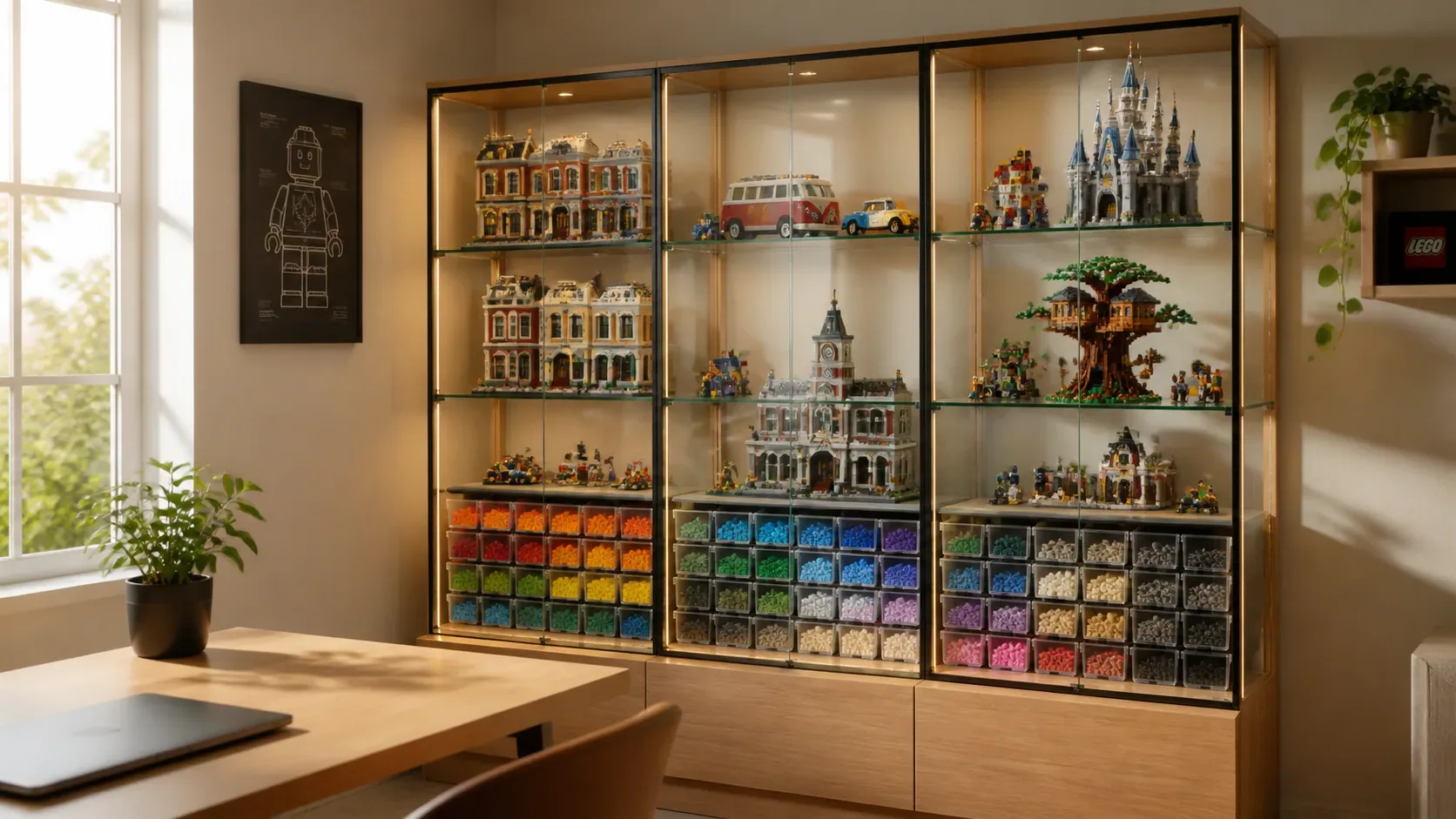
Professional display cases elevate your collection from "hobby clutter" to "curated artwork." The clean lines of acrylic enclosures, the organized interior presentation, and the unified appearance of multiple cases create a gallery effect. Friends and family immediately recognize the investment and passion your collection represents. A living room or office shelf featuring BrickZoneHub display cases communicates sophistication and intentionality in a way open shelves cannot.
Lighting options that enhance build visibility and detail
Cases with internal LED strips reveal details invisible under standard room lighting. Architectural sets' subtle shadow lines emerge, minifigure faces gain dimension, and color gradations become apparent. LED strip lighting also allows you to illuminate your display after dark, creating dramatic focal points in your space. Choose warm white LEDs (2700K) for cozy settings or cool white (4000K) for contemporary spaces. Battery-powered options avoid visible wiring, while USB-powered strips offer brighter, more consistent illumination.
Backdrop and base customization for themed displays
Personalize cases with themed backdrops and bases. Display an Architecture set against a cityscape background. Place a Creator Expert car against a garage-themed backdrop. Add landscape bases to nature-themed sets. These customizations transform individual cases into vignettes that tell stories and create emotional connections. Acrylic cases accommodate removable backdrops without adhesive damage, allowing seasonal changes or quick updates as your collection evolves.
Spatial organization strategies for multiple cases
Arrange cases by theme, color, size, or chronological acquisition. Grouping similar sets creates visual coherence and makes your collection easier to navigate mentally. Alternate case heights using risers or shelving to prevent monotony. Create focal points by isolating your most prized set at eye level with dedicated lighting. Leave breathing room between cases rather than placing them edge-to-edge—white space makes individual sets stand out rather than blurring into a cluttered mass.
Creating focal points with premium display arrangements
Position your most valuable or impressive set at the room's natural focal point—eye level on a central shelf, opposite the main seating area, or in a dedicated display nook. Flank it with complementary smaller sets to create visual balance. Use lighting to draw attention to your focal set. This hierarchy-based arrangement respects your collection's investment value while creating professional-looking displays that enhance your space's aesthetic.
Photography tips for showcasing cased collections on social media
Clear acrylic cases photograph beautifully with proper lighting. Photograph sets slightly from above at a 45-degree angle to minimize reflections. Use natural light from a window rather than flash, which creates harsh glare on acrylic. Close your room's curtains or blinds to control backlighting and prevent reflections of windows in the case. Photograph against simple backgrounds that don't compete for attention. A slightly angled shot showing the case's depth creates more dynamic images than straight-on shots. Clean the acrylic the night before photographing—acrylic attracts dust that photographs as visible smudges.
Price Range Breakdown—Finding Value Across Budget Tiers
Entry-level cases ($20–$35) and what to expect
Entry-level cases offer basic dust protection and visibility at accessible price points. These typically feature 3–4mm acrylic, snap-fit lids, and simple rectangular designs. Quality control varies by manufacturer—some deliver excellent value, while others have reports of misaligned lids or brittle acrylic. These cases suit minifigure collections or small builds where you prioritize cost over premium features. Expect potential scratches with aggressive handling and lids that require careful alignment each time you close them. The trade-off: significant savings compared to premium options.
Mid-range options ($35–$65) with enhanced features
Mid-range cases ($35–$65) represent the sweet spot for most collectors. These feature 4–5mm acrylic, magnetic lids, better assembly quality, and sometimes UV-resistant panels. Fit and finish are noticeably improved, with fewer reports of defective units. These cases accommodate small to medium builds comfortably and maintain structural integrity over years of use. You gain magnetic lids, which close smoothly and secure reliably, plus generally better customer support if issues arise. Most dedicated LEGO collectors find mid-range cases offer excellent value-to-features ratios.
Premium cases ($65–$100+) and their specialized capabilities
Premium cases ($65–$100+) feature thick acrylic (5–6mm), UV-resistant panels, magnetic lids with secure locking mechanisms, and often internal customization options like adjustable shelving or LED strip channels. Assembly quality is exceptional, with tight tolerances and flawless finishes. These accommodate large builds without flex or instability. Premium cases include superior warranties, dedicated customer support, and sometimes free replacement for defective units. If you're protecting a valuable set or creating a showcase display, premium cases justify their cost through protection quality and longevity.
Cost-per-unit analysis for protecting valuable sets
Calculate the cost per set. A $50 case protecting a $300 set costs only 16.7% of the set's value—reasonable insurance against damage. A $100 case protecting a $500 set costs only 20%. However, a $50 case for a $75 set represents significant overhead. This analysis helps determine appropriate case investment. High-value sets justify premium cases. Standard sets benefit from mid-range cases. Only budget options make sense for inexpensive starter sets.
Long-term ROI when considering preservation value
Factor preservation benefits into ROI calculations. If a mid-range case preserving a set's mint condition adds $50–100 to its resale value while costing $45, the ROI is immediate. Over a five-year period as retired sets appreciate, that preserved condition premium increases. A set that would appreciate $30 annually jumps to $40–50 annually when maintained in mint condition. A $45 case investment returns dividends over the first year through value preservation alone, with continued benefits for years.
Seasonal sales and bundle opportunities for bulk purchases
BrickZoneHub runs seasonal promotions, particularly during the holiday season and around major LEGO launch events. Black Friday and Cyber Monday bring 15–25% discounts. Bundle purchases—buying multiple cases simultaneously—often qualify for volume discounts of 10–15%. Sign up for newsletters to receive early notification of sales. Plan significant display upgrades around these promotional periods to maximize savings. Buying cases individually versus as part of seasonal sales can mean the difference between $50 and $35 per case.
Common Concerns—Addressing Scratches, Assembly, and Durability
Why cheaper cases develop visible scratches over time
Budget acrylic lacks the hardness of premium material. Without protective coatings, even dust particles can scratch the surface when wiping away fingerprints or moving cases. Cheaper cases often ship without protective film, arriving scratched from manufacturing and shipping. Acrylic thickness also matters—thin material is more prone to fine surface scratches that become visible under certain lighting angles. Mid-range and premium cases use harder acrylic and include protective films that reduce scratching from normal handling.
Assembly complexity and potential quality control issues
Entry-level cases sometimes require complex assembly with many small parts—more opportunities for misalignment or missing components. Premium cases often arrive nearly assembled, requiring only lid placement. Budget options occasionally arrive with warped pieces or missing hardware, necessitating returns. Experienced buyers report that cases from established manufacturers with strong reputations have fewer assembly issues than unknown brands offering suspiciously low prices. Read reviews specifically mentioning assembly experience before purchasing.
Lid stability and seal effectiveness across price points
Cheap snap-fit lids sometimes don't seal completely, leaving gaps where dust enters. Magnetic lids on premium cases provide superior seal reliability. Check reviews for mentions of lids that pop off when moved or won't close flush. Stability matters for stacked cases—wobbly lids on lower cases create wobbling instability in stacked configurations. Premium cases maintain consistent pressure on lids regardless of stacking height.
Warranty and customer support differences by tier
Budget cases often lack meaningful warranties. Mid-range cases typically offer 1-year coverage for manufacturing defects. Premium cases often include 2-3 year warranties, sometimes with free replacement for defects rather than repair. Premium manufacturers often provide dedicated customer service with quick response times. Budget options sometimes lack clear return policies or customer support channels. When investing $50+, confirm warranty terms and return policies before purchasing.
Real user feedback on durability under daily handling
Examine user reviews mentioning long-term durability. A case with universally positive reviews for multiple years of use is safer than one with mixed feedback despite lower price. Look for mentions of lids maintaining their seal, acrylic remaining clear, and structural integrity after years of display. Users mentioning repeated opening and closing without degradation indicate solid durability. Conversely, reviews mentioning scratches appearing within weeks of purchase suggest lower material quality.
Maintenance practices to extend case lifespan
Clean acrylic using microfiber cloths and gentle, acrylic-specific cleaners. Never use abrasive materials or harsh chemicals that degrade acrylic. Avoid touching acrylic with bare hands repeatedly—skin oils cause buildup that appears as haze. Store cases away from direct sunlight when not in use, as UV exposure degrades both acrylic and lids over extended periods. Keep lids closed when not accessing the case to maintain seal effectiveness. Place cases on stable, level surfaces to prevent stress on connection points. These simple practices extend case lifespan significantly.
Beyond Protection—Secondary Benefits That Add Value
Gift-worthy presentation for LEGO enthusiasts and collectors
Display cases make exceptional gifts for LEGO collectors, far more impressive than random sets. A quality case signals that the giver understands the recipient's passion and respects their collection enough to invest in protection. For high-value gifts, pair a case with a single premium set for a memorable combination. Cases transform from practical storage to thoughtful, personalized gifts that demonstrate genuine understanding of the recipient's interests.
Office and home décor enhancement for adult builders
Professional offices benefit from curated LEGO displays that communicate creativity and attention to detail. A tastefully arranged display of architectural sets or modular buildings elevates office aesthetics while starting conversations. Living rooms and dens gain visual interest from organized, well-lit displays. Cases make LEGO collections into intentional décor rather than hobby clutter, blending seamlessly with contemporary or traditional furnishings.
Organizational systems that simplify collection management
Cases impose structure on collections that might otherwise sprawl chaotically across multiple shelves. Numbering or photographing cases creates inventory systems for insurance purposes. Organizing by theme or acquisition date helps you locate specific sets mentally. This organizational benefit extends beyond aesthetics—it actually makes enjoying your collection easier by creating accessible, navigable displays.
Reseller advantages when displaying inventory professionally
Collectors who resell sets benefit enormously from professional display. Potential buyers see sets showcased in pristine condition within protective cases, dramatically increasing perceived value and justifying premium asking prices. Photographs of cased sets sell faster than images of loose sets on shelves. Professional resellers use display cases as part of their sales strategy, recovering the case cost through higher selling prices and faster sales velocity.
Educational display for children's LEGO achievements
Parents of young builders use display cases to honor their children's creations. A case dedicated to a child's original designs or accomplishments provides motivation and recognition. This teaches children that their creative efforts deserve respect and preservation, building confidence and encouraging continued building.
Community recognition through curated collection showcases
Online LEGO communities celebrate impressive displays. A well-organized collection in premium cases generates engagement on forums and social media. Collectors showcase their displays in community voting competitions, gaining recognition and respect. The visual impact of professional displays elevates a collector's status within the community beyond the actual sets owned.
Making Your Selection—A Practical Buying Guide
Assessing your collection size and growth projections
Count your current sets and honestly project acquisitions over the next 2–3 years. If you own five sets but plan to purchase ten more, buy cases accommodating your projected size, not current inventory. This prevents repeated upgrades and maintains consistent display aesthetics. Conservative projections lead to undersized displays; aggressive projections avoid future frustration.
Prioritizing features based on display location and purpose
Sets displayed near windows require UV-resistant panels. Cases opened frequently benefit from magnetic lids. High-traffic areas need durable, scratch-resistant materials. Sealed set displays benefit from flat, wide cases. Office displays prioritize aesthetic appeal and professional finish. Hobby room displays can prioritize function over form. Identify your primary display purpose and location, then prioritize matching case features.
Comparing BrickZoneHub options against competitor alternatives
Research competitor products offering similar dimensions and features. Compare not just price but included features, warranty terms, and customer support quality. BrickZoneHub's reputation and product quality justify their pricing relative to generic alternatives. Cheap cases often cost less because they sacrifice durability, customer support, and assembly quality—hidden expenses that appear when defective cases arrive or fail prematurely.
Reading reviews and identifying red flags in product descriptions
Prioritize recent reviews (within the last year) mentioning specific issues you care about. Flag mentions of lids not sealing, acrylic arriving scratched, assembly difficulties, or poor customer support. Multiple reviews mentioning the same issue indicate systematic problems rather than isolated incidents. Conversely, consistent praise across reviews from verified purchasers indicates solid quality.
Understanding return policies and satisfaction guarantees
Confirm that cases can be returned within 30 days if defective, and understand the return shipping process. Premium manufacturers often accept returns even beyond standard windows if quality issues develop. Avoid sellers without clear return policies—the risk of being stuck with defective cases exceeds any small savings.
Timing your purchase for optimal pricing and availability
Monitor pricing trends over 2–3 months to understand when promotions occur. Plan major purchases around known sales events. Popular sizes occasionally sell out, particularly during holiday seasons, so secure cases when available rather than waiting for hypothetical price drops that may never materialize.
Next Steps—Maximizing Your Display Case Investment
Unboxing and setup best practices for new cases
Inspect cases carefully immediately upon arrival, photographing any damage for return claims. Leave protective films on acrylic until fully positioned—removing them before placement risks introducing scratches. Position cases on stable, level surfaces before populating with sets. Ensure shelving can support the case's weight plus the LEGO sets inside. Test lids repeatedly to confirm smooth operation and proper sealing before adding sets.
Interior organization strategies for visual impact
Plan interior placement before adding sets. Taller pieces go at the back, shorter pieces forward, creating sight lines that allow viewing all pieces from the front. Vary heights using small risers or display stands to prevent monotonous flat arrangements. Leave negative space—don't pack every inch. White space actually makes individual sets stand out more than cramped displays.
Rotation schedules for featured builds and seasonal displays
Rotate featured sets every 2–3 months to maintain excitement in your display and show appreciation for the entire collection. Create seasonal displays featuring holiday-themed or season-appropriate builds. This practice keeps displays fresh and engaged, preventing the visual stagnation of static arrangements.
Cleaning and maintenance protocols for acrylic longevity
Establish monthly or quarterly cleaning schedules depending on dust levels in your home. Use microfiber cloths and acrylic-specific cleaners, never abrasive materials. Wipe gently in circular motions rather than straight lines, which emphasize streaks. Allow cleaners to dry completely before replacing sets. Avoid touching acrylic unnecessarily, as skin oils accumulate and create haze.
Integrating lighting and environmental controls
Plan electrical placement before installing cases. LED strips should route discreetly along the case's back or top. Consider adding moisture-absorbing packets inside cases if your climate is humid. Position cases away from direct heating vents and air conditioning, which create temperature fluctuations that stress plastic connections.
Documenting your collection for insurance and inventory purposes
Photograph each set from multiple angles with identifying information—set number, acquisition date, purchase price. Create a spreadsheet listing every set's details. This documentation serves insurance purposes if damage or theft occurs, and helps establish provenance when selling. Regular inventory updates prevent forgetting which sets you own and ensure nothing's misplaced within your collection.
Your Collection Deserves Better Than Dust and Damage
A BrickZoneHub LEGO display case represents far more than a storage solution—it's an investment in preservation, presentation, and pride of ownership. The right case protects your valuable builds from dust, UV damage, and accidental harm while transforming them into museum-quality displays that command admiration. The range of options available means there's a BrickZoneHub display case suited to every collection size, budget, and aesthetic preference. From compact minifigure showcases to expansive modular set enclosures, the investment pays dividends through preserved condition, enhanced visual impact, and the satisfaction of displaying your passion professionally.
Your sets have been carefully curated and thoughtfully arranged. They represent memories, achievements, and appreciation for the art of building. They've earned better than open shelves where dust settles and fingers leave smudges. They deserve the professional protection and presentation that quality display cases provide. The question isn't whether you can afford a display case—it's whether you can afford not to protect your collection's condition and value.
Don't let your prized builds gather dust—invest in a BrickZoneHub display case today