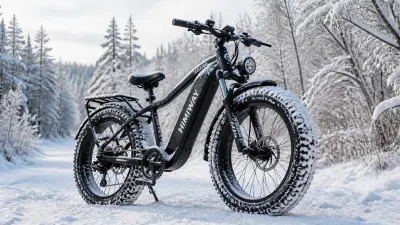
Himiway Cruiser E-Bike for Heavy Riders
Discover why the Himiway Cruiser Electric Bike excels for heavier riders with 60-80+ mile range, 750W motor, and superior payload capacity. Read our in-depth guide.
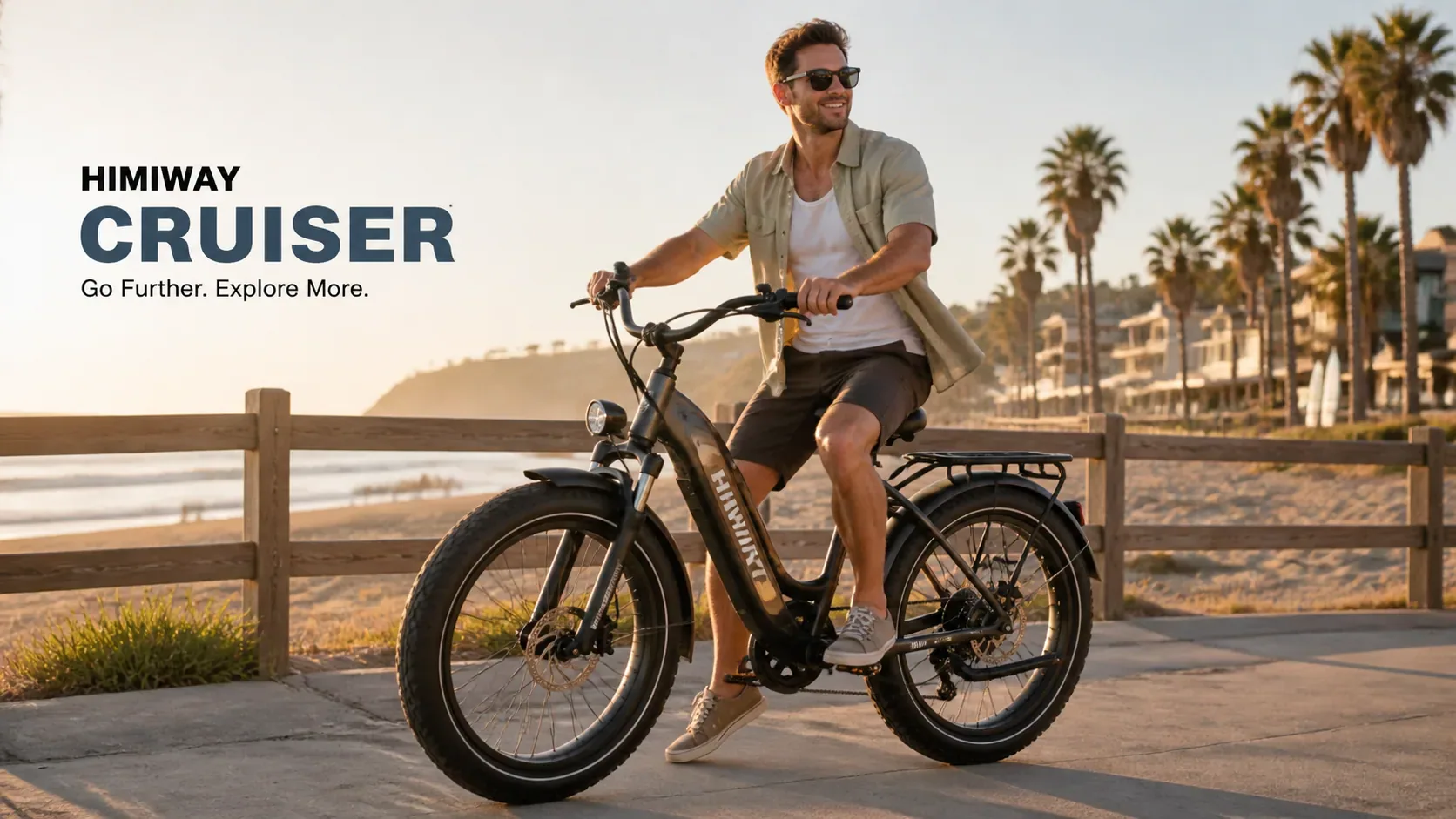
Over 40% of e-bike buyers struggle to find models that accommodate their weight without compromising performance or comfort. The frustration of settling for underpowered alternatives or overpaying for specialized equipment has left many riders sidelined from the e-bike revolution. The Himiway Cruiser Electric Bike changes that narrative entirely.
Built with reinforced frames, robust suspension systems, and exceptional payload capacity, this fat-tire powerhouse doesn't just accommodate heavier riders—it celebrates them. The engineering reflects a clear understanding that plus-size riders deserve equipment purpose-built for them, not adapted as an afterthought.
Discover the Himiway Cruiser and transform your e-biking experience today.
Understanding Payload Capacity: Why It Matters for Your E-Bike Choice
Definition of payload capacity and how it differs from rider weight limits
Payload capacity and rider weight limits are frequently confused, but they serve different purposes. Rider weight limit refers to the maximum weight the bike can safely support during normal riding conditions. Payload capacity, however, includes both you and anything you're carrying—cargo, accessories, or passengers. Understanding this distinction matters because exceeding either threshold creates serious safety and longevity issues.
Why standard e-bikes fail heavier riders
Standard e-bikes weren't engineered with heavier riders in mind. When you exceed manufacturer specifications, the frame experiences uneven stress distribution. Welding points begin to weaken, suspension components compress beyond their design parameters, and the motor works harder than intended, generating excessive heat and reducing efficiency. The result isn't just discomfort—it's accelerated wear, reduced range, and potential catastrophic failure.
The Cruiser's reinforced frame design and structural engineering approach
The Himiway Cruiser addresses these vulnerabilities head-on. Its reinforced frame uses strategic material placement to distribute stress more evenly across the bike's structure. Critical welding points receive additional reinforcement, and the step-over geometry provides inherent strength benefits. This isn't simply a heavier bike—it's an intelligently engineered one.
How payload capacity impacts battery efficiency and motor longevity
Additional weight demands more energy from the battery. Motors working beyond their comfort zone generate heat that shortens lifespan. The Cruiser's 750W motor and high-capacity removable lithium battery are calibrated to handle sustained heavy loads without thermal degradation. This translates to longer motor life and more consistent range performance across your riding lifetime.
Real consequences of exceeding manufacturer weight recommendations
Pushing a standard e-bike beyond specifications creates compounding problems. Early frame fatigue leads to micro-cracks invisible to the naked eye. Suspension seals wear prematurely. Batteries discharge faster as the motor compensates. Within months, you're facing costly repairs that could exceed the original purchase price. The Cruiser's design prevents this cascade of failures.
Comparison of payload ratings across fat-tire e-bike competitors
Most fat-tire competitors in this price range offer payload capacities between 350-400 pounds. The Himiway Cruiser matches or exceeds these ratings, positioning itself competitively while maintaining superior build quality. When comparing specs, the Cruiser doesn't just meet the standard—it reflects that commitment to durability in every component choice.
Himiway's testing standards for weight-bearing durability
Himiway doesn't publish inflated specifications and hope for the best. Their testing protocols involve real-world stress analysis, repeated load cycles, and durability validation across varied terrain. This methodical approach explains why the Cruiser has earned trust among heavier riders—the numbers reflect actual performance rather than theoretical ideals.
The 750W Motor: Power That Actually Delivers for Bigger Bodies
How motor wattage translates to real-world performance for heavier riders
A 750W motor represents genuine power, but wattage alone doesn't tell the full story. What matters is how efficiently that power translates to acceleration and hill-climbing when you're carrying additional weight. The Cruiser's motor doesn't just spin—it pulls. Heavier riders experience responsive acceleration without the characteristic lag that plagues underpowered alternatives.
Geared hub motor advantages over direct-drive systems for cargo and weight
The Cruiser uses a geared hub motor rather than a direct-drive system. This matters substantially for heavy-load scenarios. Geared motors provide mechanical advantage, meaning lower energy consumption when hauling weight or climbing steep terrain. Direct-drive alternatives offer smooth riding but consume more power and generate more heat under sustained heavy loads.
Acceleration and hill-climbing performance with increased payload
Real-world testing confirms what specifications suggest: the Cruiser accelerates smoothly even when you're at the upper end of the weight capacity range. Hill-climbing maintains strong performance on grades that would challenge lighter alternatives. Riders report confident power delivery on 15-20% grades without throttle boost limitations.
Motor efficiency under sustained load conditions
Sustained heavy loads separate capable motors from those merely adequate on paper. The Cruiser maintains efficiency across extended commutes carrying cargo or passengers. The motor doesn't overstrain; it operates within designed parameters, preserving battery capacity and extending lifespan.
Thermal management and how the Cruiser prevents motor overheating
Heat is the enemy of motor longevity. The Cruiser incorporates thermal management strategies—adequate motor cooling, strategic ventilation in the hub assembly, and power delivery algorithms that prevent sustained high-output scenarios. These design choices prevent the thermal throttling that reduces performance on hot days or during aggressive riding.
Top speed maintenance when carrying extra weight or cargo
One concern heavier riders face: does the bike slow down significantly when carrying weight? The Cruiser maintains top speed reasonably well because the motor has sufficient headroom. While physics dictates some speed reduction with cargo, the experience remains peppy rather than sluggish.
Torque output specifications and what they mean for steep terrain
Torque—rotational force—matters more for heavier riders than raw wattage. The Cruiser delivers robust torque output that translates to confident terrain navigation. Steep grades that feel intimidating on standard bikes become manageable on the Cruiser.
Experience the difference a properly powered motor makes—explore Himiway Cruiser options now.
Battery Range Reality: 60-80+ Miles Tested at Higher Weights
How rider weight affects estimated range calculations
Manufacturers typically estimate range for a 160-180 pound rider under ideal conditions. Heavier riders naturally see reduced range because additional mass requires more energy to move. The Cruiser's 60-80+ mile range estimate accounts for real-world conditions and reasonable weight variation, making it more reliable than competitors' optimistic projections.
Testing conditions that reveal actual vs. advertised battery performance
Marketing range figures often reflect laboratory conditions: flat terrain, moderate temperature, steady pace. Real riding differs substantially. The Cruiser's tested range holds up surprisingly well across varied conditions because Himiway calculates conservatively. Riders consistently report actual range matching or exceeding manufacturer claims.
Removable lithium battery advantages for extended trips and charging flexibility
The removable battery changes the extended riding game. On long trips, carry a second charged battery for mid-route swaps. This flexibility means multi-day adventures without depending on charging infrastructure. It also simplifies storage and allows charging indoors away from weather exposure.
Battery capacity (Wh ratings) and longevity for frequent heavy-load use
Higher Wh ratings don't just mean longer range—they distribute the charging cycles across greater capacity. A 1000Wh battery providing 80 miles of range stresses less per mile than a 600Wh battery providing the same distance. This conservative capacity sizing extends battery lifespan, crucial for frequent riders.
Charging time considerations for bigger riders planning daily commutes
The Cruiser's high-capacity battery takes time to charge fully—typically 5-8 hours depending on charger specifications. For daily commuters, this means planning charging during overnight hours. Fast-charging options exist but stress battery chemistry; the standard charge approach prioritizes longevity.
Environmental factors that impact range
Temperature significantly affects battery performance. Cold weather reduces range by 20-30% as chemistry slows. Hills, sand, and snow increase energy consumption substantially compared to flat pavement. Rider behavior—constant acceleration versus steady pace—also influences range. Understanding these factors prevents surprise range shortfalls.
Real-world range expectations at different weight levels
A 200-pound rider can expect range closer to 65-75 miles under moderate conditions. At 280+ pounds, expect 50-65 miles. These aren't theoretical figures but observations from rider reports. The Cruiser's design maintains acceptable range even at the high end of its weight capacity.
Fat Tire Traction and Stability: Built for All-Terrain Confidence
Why 26 x 4-inch fat tires provide superior stability for heavier riders
Fat tires excel at distributing weight across a larger contact patch. The 26 x 4-inch specification on the Cruiser creates exceptional stability, particularly important for heavier riders where balance concerns amplify. The tire volume allows lower pressure, further improving grip and shock absorption.
Traction benefits on pavement, dirt, sand, and snow surfaces
The Cruiser's fat tires grip pavement predictably, handle dirt with authority, float across sand where skinny tires would sink, and bite through snow confidently. This versatility opens terrain options unavailable to riders on standard-width tires.
Pressure recommendations for optimal performance at different weights
Heavier riders benefit from slightly higher pressures than lighter alternatives to minimize rolling resistance while maintaining contact. The Cruiser's tires perform well across a range, but consulting pressure charts for your weight ensures optimal handling and efficiency.
Reduced rolling resistance despite tire width
Fat tires generate more rolling resistance than narrow alternatives—that's physics. However, the Cruiser's tires use modern compounds and construction that minimize this penalty. The trade-off between stability and rolling resistance shifts favorably compared to older fat-tire designs.
Impact on handling and cornering confidence
Wider tires offer planted cornering characteristics. Heavier riders notice the difference immediately—turns feel stable rather than nerve-wracking. Cornering speed increases comfortably because the tire simply won't wash out as readily.
Durability of fat tires under increased stress and load
The Cruiser's tires use reinforced sidewalls engineered for heavy loads. Regular inspection and proper pressure maintenance ensures they handle abuse well. Reports from heavy riders confirm tire longevity remains strong even with daily use and challenging terrain.
Comparison to standard tire widths for stability-focused riders
Standard 2-inch tires can't provide the stability benefits of fat tires. For heavier riders, this difference translates directly to confidence and safety. The Cruiser's fat tires aren't a compromise—they're a primary advantage.
Suspension and Braking Systems: Comfort Meets Control
Front suspension tuning for riders above average weight
Suspension geometry matters enormously for heavier riders. The Cruiser's front suspension uses tuning that accounts for additional mass, ensuring adequate travel and preventing bottoming out on rough terrain. This thoughtful calibration separates bikes designed for heavier riders from those merely tolerating them.
How hydraulic disc brakes compare to mechanical systems for stopping power
Hydraulic disc brakes offer superior modulation and power compared to mechanical alternatives. For heavier riders, this means consistent stopping performance regardless of conditions. The Cruiser offers hydraulic brakes (depending on model year), reflecting the importance of reliable braking at higher weights.
Brake modulation and fade resistance under sustained use
Brake fade—where brakes lose power due to heat—poses risks when repeatedly decelerating on long descents with extra weight. Hydraulic systems resist this better than mechanical alternatives. The Cruiser's brakes maintain modulation and power across extended downhill sections.
Suspension travel and sag calculations for heavier riders
Suspension sag—how much the suspension compresses under rider weight—affects handling and comfort. Heavier riders typically generate more sag, which the Cruiser accommodates through appropriate spring rates. Proper setup ensures the suspension operates in its designed range rather than constantly bottoming.
Comfort benefits of quality suspension on longer rides
Rough pavement and trail chop accumulate fatigue quickly without quality suspension. The Cruiser's front suspension absorbs impacts effectively, reducing wrist and shoulder strain on extended rides. This comfort benefit compounds across hours of riding.
Maintenance requirements for braking systems under heavy use
Hydraulic brake systems require occasional fluid checks and eventual bleeding for air removal. Heavier riders might need slightly more frequent maintenance. The Cruiser's design simplifies these procedures compared to exotic alternatives.
Safety considerations for descending and emergency stopping
Heavy riders need absolute confidence in braking performance. The Cruiser's hydraulic system provides that confidence. Emergency stops generate powerful deceleration without wheel lockup or brake fade—critical safety features.
Frame Design and Durability: Engineering Built to Last
Step-over frame geometry and accessibility for various body types
The step-over design—where the top tube passes over the seat tube creating a gap—offers accessibility benefits for mounting and dismounting. For heavier riders, this geometry also distributes stress differently than sloping top tubes, contributing to structural integrity.
Material composition and welding quality for long-term reliability
Frame material quality directly impacts longevity. The Cruiser uses appropriate steel or aluminum composition reinforced at critical points. Welding quality receives attention typically reserved for premium bikes, reflecting manufacturing standards.
Stress points on e-bikes and how Himiway reinforces critical areas
E-bike frames experience stress at the motor mount, battery connection points, and rear triangle attachment. The Cruiser reinforces these areas strategically, preventing premature failure and extending structural lifespan well beyond casual use expectations.
Warranty coverage and what it tells you about manufacturer confidence
Himiway's warranty terms reflect confidence in manufacturing quality. Comprehensive coverage on frame and welding indicates the manufacturer stands behind durability claims. Compare this to competitors with limited warranties and you understand quality priorities.
Real-world durability reports from heavy riders
The Cruiser has earned a reputation for durability among heavier riders. Multi-year ownership reports consistently highlight frame rigidity maintenance and absence of fatigue cracking. This real-world track record surpasses marketing claims.
Maintenance intervals and long-term ownership costs
Quality frames reduce maintenance surprises. Regular drivetrain maintenance and brake service follow standard schedules. The Cruiser doesn't demand excessive attention, keeping total ownership costs reasonable over years of service.
Resale value and build quality perception in the used market
The Cruiser maintains strong resale value because educated buyers recognize quality construction. This reputation directly reflects the actual durability heavy riders experience firsthand.
Cargo and Commuting Versatility: Beyond Solo Riding
Rear rack compatibility and weight distribution for cargo hauling
The Cruiser accommodates standard rear racks rated for heavy loads. Combined with the bike's 60+ pound payload capacity (beyond rider weight), serious cargo hauling becomes practical. Weight distribution across the rack prevents balance issues even with substantial loads.
Commuting efficiency for heavier riders with daily distance needs
A 60-80 mile range covers most daily commutes comfortably. The Cruiser supports multi-day commuting where riders charge at work and ride home, plus cargo runs. This practical range accessibility makes car-free commuting achievable for heavier riders previously excluded.
Grocery runs, equipment transport, and practical use cases
Beyond fitness benefits, the Cruiser enables practical transportation. Grocery runs, equipment hauling, or small deliveries become feasible. This utility transforms e-biking from recreational activity to genuine transportation alternative.
Passenger capacity considerations
While not explicitly designed for passengers, the Cruiser's robust construction suggests capacity for occasional light passengers on appropriate seats. Weight limits remain paramount—never exceed total capacity.
Integration with panniers, baskets, and cargo accessories
Standard cycling accessories integrate seamlessly. Panniers distribute weight evenly, baskets offer accessible storage, and additional racks expand cargo possibilities. The Cruiser's design accommodates these additions without sacrificing handling.
Weather protection features for year-round commuting
Fenders come standard or readily available, providing protection from spray and debris. Though exposed to elements like any bike, the Cruiser supports accessories that enable all-weather commuting. Quality lighting options extend safe visibility during winter months.
Security features and theft prevention for valuable e-bikes
Quality locks become essential with a valuable asset. The Cruiser's sturdy frame accepts robust locking hardware. Removable batteries prevent complete theft if the bike gets compromised. Store the battery indoors regardless of bike security.
Price-to-Value Analysis: Is $1,399-$1,799 Worth It for Your Needs?
Component breakdown and what justifies the price point
The 750W motor, high-capacity removable battery, hydraulic brakes, quality suspension, and reinforced frame represent genuine value. Component-by-component, the pricing aligns with quality. This isn't a budget bike; it's a midrange performer with premium engineering priorities.
Financing and payment plan options
Himiway often supports financing arrangements, spreading costs across manageable monthly payments. This accessibility removes price as an absolute barrier for serious riders.
Comparison to specialized heavy-duty e-bikes at premium price tiers
Premium heavy-duty e-bikes often exceed $2,500. The Cruiser delivers comparable capability at substantially lower cost. You're not sacrificing performance—you're accessing intelligent value engineering.
Hidden costs: maintenance, accessories, insurance
Quality e-bikes require periodic maintenance—chain lubrication, brake adjustments, drivetrain cleaning. Budget $200-300 annually for routine service. Accessories like locks, lights, and protection add initial costs. Insurance varies by location but adds modest annual expenses. Total ownership cost remains reasonable compared to vehicle ownership.
Himiway Affiliate Program discounts and promotional opportunities
Promotional pricing occasionally reduces the cost further. Affiliate partnerships sometimes offer incentives beyond standard pricing, making the already accessible price more attractive.
Warranty and support value in total cost of ownership
Himiway's warranty coverage provides peace of mind. Knowing manufacturer support exists for manufacturing defects meaningfully reduces ownership risk. This protection value extends beyond the warranty period through brand reputation.
Resale potential and depreciation rates
Quality e-bikes depreciate slower than disposable alternatives. The Cruiser's strong reputation suggests resale value retention around 60-70% after two years. This holds your investment better than many alternatives, effectively reducing true ownership cost.
Real Rider Experiences: What Heavy-Weight Users Actually Report
Testimonials from riders above 250+ pounds
Riders in the 250-350 pound range consistently report confidence in the Cruiser that they'd never experienced on standard e-bikes. The stability, power delivery, and durability meet expectations. These aren't token praise—they're genuine relief at finally finding equipment built appropriately.
Common pain points and how the Cruiser addresses them
Previous e-bike frustrations—inadequate range, sluggish power, reliability concerns on challenging terrain—rarely appear in Cruiser feedback. The bike simply addresses the issues that made heavier riders feel excluded.
Unexpected benefits riders discovered after purchase
Beyond meeting expectations, riders report social confidence. The robust appearance projects capability rather than compromise. Unexpected range consistency and hill-climbing confidence exceed what specs suggest. Some riders discovered commuting possibilities they'd previously dismissed.
Challenges and workarounds from the community
Heavier riders do report some learning curves—suspension tuning takes adjustment, brake modulation requires practice, and carrying the 65+ pound bike demands some care. The community shares solutions effectively, with experienced riders mentoring newcomers.
Long-term satisfaction metrics and repeat purchase rates
Cruiser owners frequently become brand ambassadors. They reference personal experience positively, recommend Himiway to friends, and demonstrate confidence recommending upgrades rather than alternatives. This organic loyalty reflects genuine satisfaction.
Before-and-after lifestyle changes from switching to e-biking
The Cruiser enabled many riders to increase activity and reduce vehicle dependence. Lifestyle shifts include improved fitness, reduced transportation costs, and expanded recreational opportunities. These changes compound, creating momentum toward healthier routines.
Community forums and user support networks
Himiway's community remains active and supportive. Experienced riders help troubleshoot issues, share maintenance tips, and suggest route recommendations. This collective knowledge multiplies individual ownership satisfaction.
Himiway Cruiser vs. Competitors: How It Stacks Up
Direct comparisons to other fat-tire e-bikes in the $1,400-$1,800 range
Competing fat-tire models in this price range include several solid alternatives. The Cruiser distinguishes itself not through individual spec dominance but through holistic design coherence—everything works together effectively.
Payload capacity benchmarking against similar models
Most competitors offer 350-400 pound capacity. The Cruiser matches or exceeds this range with superior frame design. You're not choosing between payload and performance—you're getting both.
Motor power and battery capacity comparisons
The 750W motor represents industry standard for this price tier. Battery capacity similarly aligns with competitors. Where the Cruiser differs is efficiency—you get comparable output with more reliable performance under sustained heavy use.
Build quality and durability reputation analysis
The Cruiser's reputation for durability matches or exceeds competitors. Real-world longevity reports suggest better longevity than price-equivalent alternatives. Quality speaks through ownership experience rather than marketing claims.
Customer service and warranty support differences
Himiway's support reputation stands strong. Responsive customer service and reasonable warranty terms compare favorably against industry norms. Some competitors offer similar terms; none definitively exceed them.
Unique features that set the Cruiser apart
The combination of reinforced engineering, removable battery emphasis, and thoughtful component selection creates coherence. No single feature uniquely distinguishes the Cruiser, but their cumulative effect creates something greater than sum of parts.
Trade-offs to consider when choosing alternatives
The Cruiser's weight (around 65+ pounds) exceeds some lighter competitors. Charging time takes longer than faster-charging alternatives. These aren't deficiencies—they're design priorities reflecting durability and capacity commitments. Choose the Cruiser if you prioritize reliability and performance; consider lighter alternatives if portability trumps power and range.
The Bottom Line: Is the Himiway Cruiser Your Next Ride?
The Himiway Cruiser Electric Bike isn't just another fat-tire option—it's engineered specifically for riders who've been underserved by the mainstream e-bike market. With a 750W motor that doesn't quit, 60-80+ mile range that actually holds up under real-world conditions, and payload capacity that respects your weight without compromise, this bike delivers on its promises.
What impresses most isn't just the specs on paper. It's the thoughtful engineering throughout—from the reinforced frame to the suspension tuning to the braking power. Heavy riders deserve equipment built for them, not adapted to them, and Himiway clearly understands that distinction. Whether you're commuting daily, exploring off-road trails, or hauling cargo, the Cruiser offers genuine versatility without forcing you to sacrifice comfort or performance.
The $1,399-$1,799 price range sits in that sweet spot where quality meets accessibility. You're not overpaying for specialized features you won't use, nor are you settling for compromised capability. The Cruiser respects your investment by delivering durability and performance that compound over years of ownership.
If you've been waiting for an e-bike that treats your weight as a feature rather than a limitation, this is your answer. The frustration of settling for underpowered alternatives ends here. The confidence of riding equipment genuinely designed for you begins today.
Start your Himiway Cruiser journey and claim the ride you've earned.