Choose the Right Eonon Android Car Stereo
Discover how to select the perfect Eonon Android car stereo for your needs. Compare features, screen sizes, compatibility, and pricing to upgrade your dashboard with modern infotainment technology.
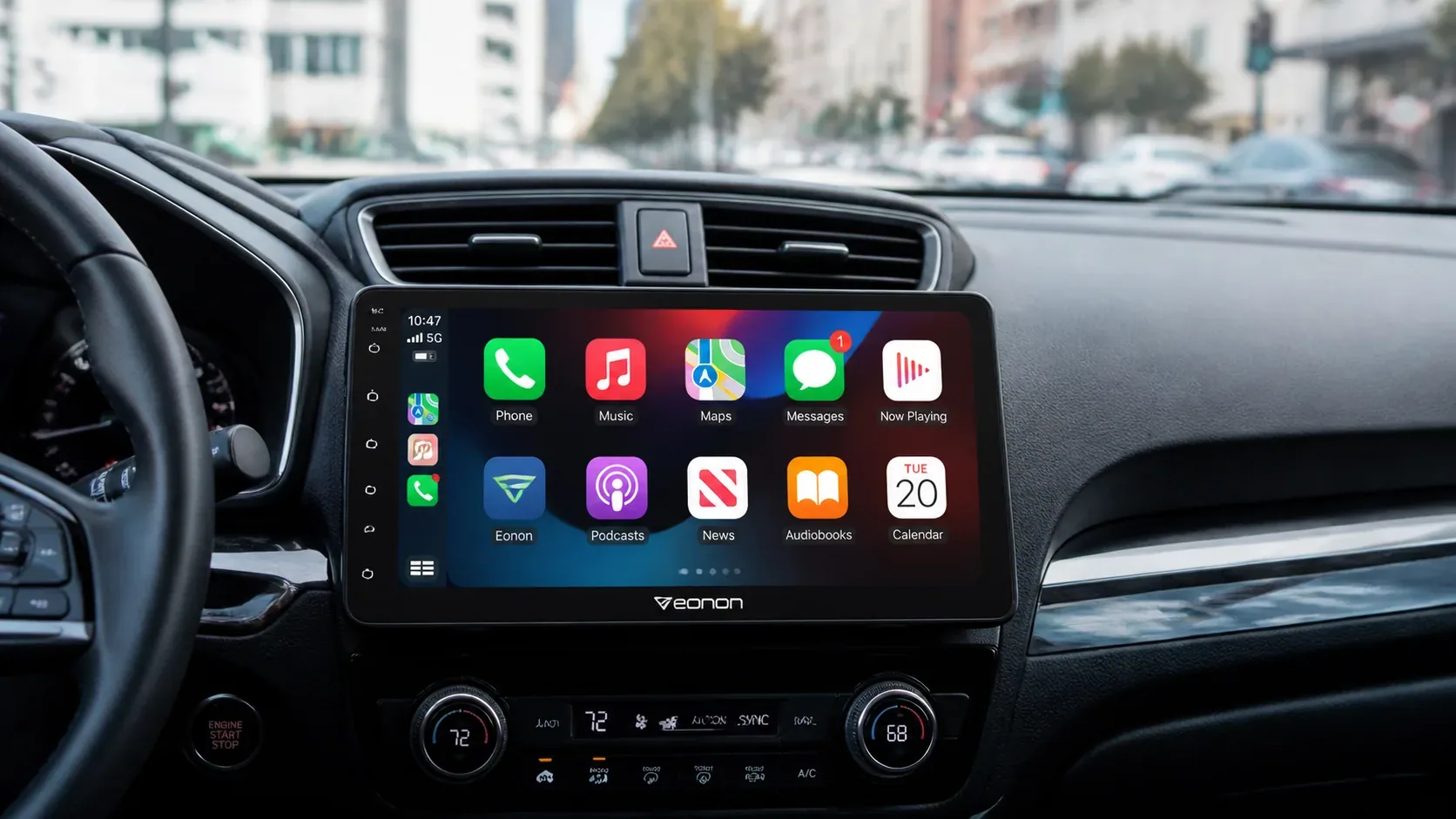
Over 60% of drivers still rely on factory head units that lack basic smartphone integration, forcing them to fumble with outdated interfaces or use their phones at arm's length. This antiquated setup frustrates anyone who's tried navigating with a decade-old GPS or pairing a smartphone that the original head unit was never designed to handle. Eonon Android car stereos have emerged as the practical solution for drivers seeking a modern infotainment overhaul without the premium price tag that luxury automakers demand.
These aftermarket head units pack impressive features—large touchscreens, built-in DSP sound tuning, wireless connectivity, and full Android customization—all priced competitively enough to justify the investment. Whether you're upgrading a used vehicle or breathing new life into an older model, these units deliver genuine value that transforms how you interact with your dashboard every single day.
Explore Eonon's Android car stereo lineup today and find the perfect match for your vehicle. This comprehensive guide will help you navigate the selection process by examining different screen sizes and display technologies, understanding which connectivity features align with your lifestyle, exploring compatibility across various vehicle types, and discovering how to balance features with your budget.
Understanding Display Size and Panel Technology
Comparing 6.2-inch, 7-inch, 9-inch, and 10.1-inch touchscreen options and their visual impact on your dashboard
Screen size matters more than you might think. A 6.2-inch unit fits seamlessly into compact dashboards without overwhelming the space, while still providing enough real estate for navigation and media controls. Moving up to 7 inches adds noticeable visibility without requiring significant dash modifications in most vehicles. The 9-inch sweet spot appeals to drivers who want immersion without going full tablet—it creates visual impact while maintaining a balanced look. At 10.1 inches, you're essentially floating a small tablet into your dashboard, which some find spectacular and others find excessive.
Your vehicle's available space and personal preference for visual dominance should guide this choice. Compact cars typically suit smaller displays, while SUVs and trucks accommodate larger screens that command attention without looking out of place.
How IPS panel technology delivers better color accuracy and wider viewing angles versus standard LCD displays
IPS (In-Plane Switching) panels represent a meaningful upgrade over standard LCD technology. Colors remain vibrant and accurate even when viewing the screen from extreme angles, which matters when passengers glance at the display or sunlight hits the screen at different times of day. Standard LCD panels can wash out or shift colors significantly when viewed off-angle, reducing readability during those critical moments when you need clarity most.
The difference becomes especially apparent with backup camera feeds or when adjusting audio settings from the passenger seat. IPS technology costs slightly more, but the improved visual experience justifies the extra investment for anyone who values responsive, color-accurate interfaces.
Resolution differences (720p, 1080p, 2K) and their effect on app clarity and user experience
Resolution directly impacts how sharp apps appear and how quickly you can read small text without squinting. A 720p display works fine for basic navigation and media playback, but app icons, text in settings menus, and map details can appear slightly blurry on larger screens. Moving to 1080p (Full HD) eliminates that fuzziness, delivering crisp visuals across all screen sizes. At 2K resolution, you're experiencing genuinely sharp, detailed visuals that make longer drives more visually pleasant.
Consider how much time you spend looking at the screen and reading fine details. Daily commuters who frequently adjust settings or read navigation prompts benefit more from higher resolution than weekend drivers who mainly use voice commands and familiar routes.
Connectivity Features That Transform Your Driving Experience
Wireless versus wired Apple CarPlay and Android Auto—speed, reliability, and convenience trade-offs
Wireless Apple CarPlay and Android Auto eliminate cable clutter and the ritual of plugging in every time you enter the vehicle. The convenience factor is undeniable—just get in and drive, and your phone's interface appears on the screen automatically. However, wireless connections occasionally experience lag during heavy navigation or can drop momentarily if Bluetooth encounters interference.
Wired connections provide rock-solid stability and instantaneous response with zero latency, ensuring your navigation maps refresh instantly and voice commands process without delay. Many Eonon models offer both options, letting you choose based on your situation—wireless for daily commuting and wired for a road trip where reliability matters most.
Dual-phone Bluetooth pairing for seamless switching between driver and passenger devices
Multi-device pairing lets the stereo remember two phones simultaneously, automatically connecting to whichever device is closest or most recently paired. This eliminates the frustration of disconnecting one phone before connecting another, particularly useful for households where multiple family members share a vehicle.
The seamless handoff between driver and passenger audio becomes a convenience feature that feels effortless in practice. You're no longer managing Bluetooth connections manually—the system handles it intelligently.
Wi-Fi connectivity benefits for app downloads, map updates, and streaming service access
Built-in Wi-Fi enables background app downloads and map updates without tethering your phone's data plan. When parked in your garage or at home, the stereo can download the latest navigation maps, weather data, and app updates overnight. This keeps your system current without consuming mobile data or requiring manual management.
Streaming services also benefit from Wi-Fi connectivity, delivering smoother audio playback for Spotify, Apple Music, or YouTube Music without relying on cellular bandwidth. For anyone with limited data plans, this feature provides genuine monthly savings.
Check out Eonon's connectivity-focused models and see which options match your smartphone ecosystem.
Vehicle Compatibility and Installation Considerations
How Eonon designs model-specific units for popular vehicle makes and years
Eonon manufactures purpose-built units for specific vehicle models, meaning the head unit's physical dimensions, connectors, and mounting brackets align perfectly with your vehicle's existing dashboard architecture. A unit designed for a 2015 Toyota Camry physically fits where the original head unit sat, without requiring extensive modifications or adapter plates.
This model-specific design simplifies installation and ensures cleaner integration compared to universal units that might require custom mounting or awkward adapter solutions. When shopping, identifying your exact vehicle year, make, and model ensures you're looking at compatible options.
OEM-style integration that matches your vehicle's interior design language
Modern Eonon units reflect current dashboard aesthetics rather than looking like aftermarket band-aids grafted onto your car. The bezels, trim finishes, and overall presentation align with your vehicle's interior design, creating a cohesive look rather than contrasting technology awkwardly against factory trim.
This attention to visual harmony means your upgraded stereo enhances rather than detracts from your vehicle's interior. Passengers won't immediately notice it's an aftermarket unit because it integrates so naturally with the original dashboard design.
Steering wheel control compatibility and what it means for safe, hands-free operation
Many Eonon models support your vehicle's existing steering wheel control buttons, allowing you to adjust volume, change tracks, or answer calls without removing your hands from the wheel. The stereo learns which button controls which function and responds accordingly, translating your factory controls into modern functionality.
This safety feature matters significantly during commutes and highway driving. You maintain full vehicle control while managing audio and communications through familiar controls, reducing distraction and keeping your attention where it belongs.
Sound Quality and Audio Customization Options
Built-in DSP (Digital Signal Processor) for customizable audio profiles and equalization
A DSP allows you to shape your vehicle's audio signature without installing additional hardware. You can boost bass frequencies for hip-hop and pop, flatten the midrange for podcasts and audiobooks, or create custom presets for different listening moods. The processing happens inside the head unit, delivering professional-grade audio tuning at the touch of a finger.
Factory head units typically lack this capability, meaning you're stuck with whatever sonic character the manufacturer pre-programmed. Eonon's DSP functionality gives you complete control over how your music sounds, whether you're listening to classical recordings or heavy metal.
How Eonon stereos support external amplifiers and subwoofers for enhanced bass and power
If you decide later that you want more power or a dedicated subwoofer rumbling below your seat, Eonon units include pre-amp outputs that connect to external amplifiers. The head unit sends a low-level signal to the amp, which then powers your aftermarket speakers and subwoofers independently.
This modular approach means you're not locked into the stereo's internal amplifier. Start with the built-in amp, and upgrade to external amplification whenever your budget or audio ambitions expand. Many enthusiasts appreciate this flexibility because it eliminates the need to replace the entire head unit if you want to upgrade your power or speaker configuration.
Pre-amp outputs and their importance for connecting aftermarket audio components
Pre-amp outputs deliver full-range audio signals at a consistent level, designed specifically for connecting external amplifiers and processors. Unlike speaker-level outputs, pre-amp outputs provide clean, undistorted signals that external amps can amplify without noise interference.
This technical capability separates capable aftermarket head units from limitations of many factory units. You can build a genuinely high-quality audio system starting with the Eonon stereo as your control center.
Software Performance and Customization Capabilities
The Android-based operating system and access to Google Play Store for app installation
Running on Android means you're not limited to whatever apps Eonon pre-loads on the unit. Access to Google Play Store lets you install navigation apps beyond Google Maps, like Waze or offline mapping solutions. You can download radio apps, music services, and vehicle-specific utilities that enhance your driving experience.
This open ecosystem contrasts sharply with many factory systems that lock you into manufacturer-approved apps. You're in control of which tools and services integrate with your stereo.
Performance differences across processor types and RAM configurations
Entry-level Eonon models use efficient processors that handle standard tasks smoothly—navigation, music playback, Bluetooth calls—without noticeable lag. Mid-range units step up to faster processors and more RAM, enabling split-screen multitasking and smoother app switching. Premium models include the latest processors and maximum RAM for instantaneous responsiveness.
The performance difference becomes apparent when you're running multiple apps simultaneously or juggling navigation with music streaming. For typical daily use, mid-range performance meets most drivers' needs perfectly. Heavy multitaskers and app enthusiasts benefit more from stepping up to premium configurations.
Software update frequency and how Eonon handles bug fixes and feature improvements
Eonon regularly releases software updates that fix bugs, improve stability, and occasionally add new features. These updates roll out over-the-air when connected to Wi-Fi, keeping your system current without visits to service centers or manual updates.
The frequency of updates varies, but active support means your stereo improves over time rather than becoming stagnant. This commitment to ongoing development provides confidence that your investment remains viable and competitive long-term.
Pricing Strategy and Feature Tiers
Entry-level models ($200–$300) and what features you sacrifice for lower prices
Entry-level Eonon stereos deliver core functionality—touchscreen interface, Apple CarPlay and Android Auto, Bluetooth connectivity, and basic audio controls. You're getting genuine upgrades over factory head units at accessible prices. The trade-offs typically involve smaller screens (6.2 or 7 inches), standard LCD panels instead of IPS, and processors that handle standard tasks but don't multitask as smoothly.
For drivers prioritizing cost and functionality over advanced features, entry-level options provide solid value. You're significantly improving your infotainment experience without spending substantial money.
Mid-range options ($300–$450) that deliver the best balance of features and affordability
This price tier represents the sweet spot for most drivers. You're getting 9-inch displays with IPS panels, responsive processors with ample RAM, wireless connectivity options, and full access to customization features. Mid-range units often include the DSP functionality and more polished software experiences compared to entry-level models.
The value-to-cost ratio peaks in this range. You're not compromising significantly on features, yet you're avoiding the premium pricing of luxury options. Most reviewers and satisfied customers land in this category because it delivers genuine capability without excessive spending.
Premium models ($450+) with larger screens, advanced processors, and extended warranties
Premium Eonon units feature 10.1-inch displays, cutting-edge processors, maximum RAM configurations, and sometimes extended warranties or additional customer support. These models represent the full capability range, offering everything Eonon manufactures in a single package.
Premium pricing attracts drivers who want the absolute best experience and don't want to compromise on screen size, performance, or features. If budget allows and you spend significant time in your vehicle, premium models deliver a genuinely impressive upgrade that rivals aftermarket options costing significantly more.
Making Your Final Decision—Key Factors to Weigh
Defining your must-have features versus nice-to-have upgrades
Start by listing non-negotiable requirements. Do you absolutely need wireless Apple CarPlay, or is wired connectivity acceptable? Must you have a 10-inch display, or will 9 inches satisfy your needs? Does DSP audio tuning matter, or are you content with basic audio controls? Distinguishing must-haves from nice-to-haves prevents you from overspending on features you won't actually use.
Write down your priorities and reference them while browsing options. This anchors your decision-making in reality rather than getting distracted by feature lists or promotional descriptions.
Matching screen size to your vehicle's dashboard space and personal preferences
Visit a friend's vehicle with an Eonon unit if possible, or watch videos of different screen sizes installed in vehicles similar to yours. Seeing the actual visual impact helps clarify whether you prefer subtle integration or statement-making presence. Physical space constraints matter too—a 10-inch unit might not fit your dashboard without modifications.
Balance aesthetic preferences with practical dashboard real estate. You want a unit that transforms your driving experience without looking awkwardly oversized or undersized in your specific vehicle.
Evaluating connectivity needs based on your smartphone ecosystem and driving habits
If you switch between iPhone and Android devices, you'll prioritize units supporting both Apple CarPlay and Android Auto flawlessly. If you're committed exclusively to Apple devices, you can focus on optimizing the CarPlay experience. Regular commuters benefit more from wireless connectivity convenience, while road-trip enthusiasts might prefer wired reliability.
Match the connectivity feature set to your actual usage patterns. Your daily driving habits should dictate which options matter most, not theoretical capabilities you'll never use.
Your Dashboard Upgrade Awaits
Choosing the right Eonon Android car stereo means weighing display technology, connectivity options, vehicle compatibility, audio capabilities, software performance, and budget all at once. The sweet spot for most drivers lands in that $300–$450 range, where you get generous screen sizes, solid connectivity, and reliable performance without overspending. What makes Eonon stand out is the practical balance they've struck—you're not paying luxury-brand prices, yet you're gaining wireless CarPlay, Android Auto, customizable audio tuning, and a dashboard that finally feels like it belongs in the present.
Start by identifying your vehicle model on Eonon's site, compare the available options, and prioritize the features that matter most to your driving lifestyle. Your next drive could be your first one with a truly connected, customizable infotainment system.
Visit Eonon now and discover the Android car stereo that transforms your driving experience.