SIRUI 50mm Anamorphic Lens: Budget Cinema Glass
Discover how the SIRUI 50mm anamorphic lens delivers professional cinematic aesthetics for indie creators and filmmakers. Learn specs, mount options, and whether this affordable anamorphic glass fits your workflow.
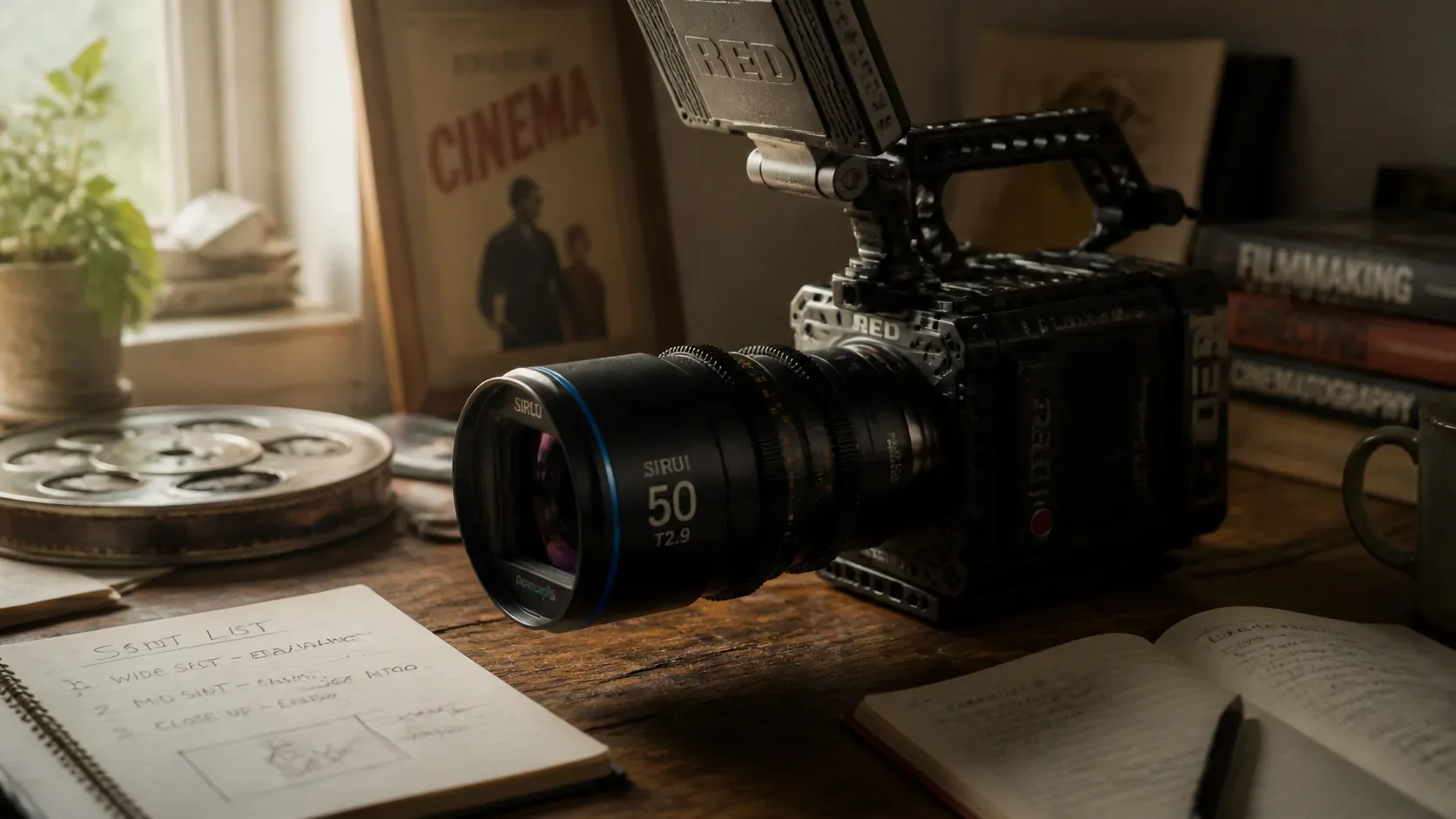
Anamorphic lenses once belonged exclusively to Hollywood productions and six-figure budgets. Today, 75% of indie filmmakers and YouTube creators are actively pursuing that iconic cinematic look—and they're doing it without mortgaging their equipment funds. The SIRUI 50mm anamorphic lens sits at the center of that revolution, delivering true anamorphic rendering with signature horizontal flares, distinctive oval bokeh, and unmistakable 2.35:1 cinematic framing without spending what a used car costs.
This accessibility shift marks a fundamental change in how creators approach visual storytelling. Equipment that once required industry connections and substantial capital investment now sits within reach for ambitious filmmakers working with modest budgets. SIRUI has positioned itself as the bridge between professional optical standards and the financial reality of independent production, making sophisticated cinema technology feel genuinely attainable.
Explore the SIRUI 50mm anamorphic lens and transform your visual storytelling today.
Understanding Anamorphic Optics: What Makes the 50mm Special
How 1.33x anamorphic squeeze creates the 2.35:1 cinematic aspect ratio
Anamorphic optics compress the horizontal axis of your image during capture, creating that distinctive widescreen aesthetic. The 1.33x squeeze factor means your sensor records a horizontally compressed image that, when desqueezed in post-production or during projection, expands to reveal the full cinematic width. This isn't a digital trick or aspect ratio selection in your menu—it's optical compression happening inside the glass itself, which fundamentally changes how light behaves as it passes through the lens.
Why the 50mm focal length strikes the ideal balance between wide coverage and subject isolation
Fifty millimeters occupies a sweet spot in focal length strategy. On full-frame sensors, it provides genuinely useful coverage for environmental storytelling without the extreme distortion of ultra-wide glass. On APS-C formats, the crop factor pushes the effective focal length closer to 75mm, offering subtle compression that flatters subjects while maintaining environmental context. This balance makes the 50mm practical for everything from intimate dialogue scenes to establishing shots that ground your narrative in place.
The optical mechanics behind oval bokeh and horizontal lens flare generation
Anamorphic lens design uses cylindrical elements alongside spherical optics, creating bokeh that stretches horizontally rather than remaining perfectly circular. This distinctive oval shape becomes a signature element of anamorphic cinematography, instantly signaling a premium visual approach to viewers. The horizontal lens flares emerge naturally from the anamorphic optical path—light refracting across multiple cylindrical surfaces creates those characteristic horizontal streaks rather than traditional radial flares. These aren't post-production effects; they're embedded in the optical design.
How anamorphic rendering differs from digital cropping or aspect ratio tricks
Digital cropping captures a spherical image and simply removes pixels from top and bottom, destroying resolution and optical character in the process. Anamorphic lenses, conversely, use their optical design to render the scene fundamentally differently—compressing it horizontally while preserving full sensor resolution and creating optical artifacts (flares, bokeh, distortion characteristics) that are impossible to replicate digitally. This distinction matters profoundly because it means you're working with optically authentic anamorphic rendering, not a software approximation.
Why true anamorphic glass delivers character that post-production can't replicate
You can't fake optical compression in editing software. When light passes through anamorphic cylindrical elements, it creates physical changes in how the scene is rendered—bokeh shape, flare behavior, chromatic characteristics, and dimensional rendering all emerge from the optics themselves. Post-production color grading, lens flare plugins, and aspect ratio adjustments create approximations, but they lack the optical integrity of glass specifically engineered for anamorphic capture. This authenticity resonates with audiences, even if they can't consciously articulate why the image feels more cinematic.
The role of lens design in maintaining sharpness across the frame at f/1.8
Designing sharp anamorphic glass at f/1.8 requires sophisticated optical engineering. The combination of cylindrical and spherical elements must correct aberrations across the entire image circle while maintaining the bright aperture necessary for run-and-gun shooting and low-light performance. SIRUI's optical formula achieves this through multi-element designs that prioritize sharpness consistency from center to edges, even though some optical compromises are inevitable at this price point. The result is glass that delivers genuine sharpness suitable for professional production while remaining affordable.
Mount Compatibility: Finding Your Perfect Fit
Sony E-mount availability and performance on full-frame and APS-C bodies
The SIRUI 50mm is available for Sony E-mount, making it compatible with the entire range of Sony mirrorless cameras from the a6400 APS-C system through full-frame bodies like the a7 IV and a7R V. On full-frame Sony cameras, the 50mm rendering remains true to its design, providing the classic anamorphic perspective. On APS-C bodies, the crop factor effectively lengthens the focal length, creating a slightly more compressed framing that works beautifully for portrait and medium-distance work. Both scenarios deliver authentic anamorphic character.
Canon RF mount integration with EOS R mirrorless systems
Canon's RF-mount version integrates seamlessly with the EOS R series, including the R5, R6, and R7 bodies. Canon's mirrorless ecosystem provides excellent autofocus infrastructure on the camera body itself, though the 50mm remains manual-focus only. The RF-mount version maintains optical parity with other mounts while benefiting from Canon's robust lens ecosystem for complementary glass.
Nikon Z mount options for Z6, Z7, and Z9 series cameras
Nikon Z-mount availability encompasses the Z6 and Z7 full-frame lines, as well as the high-resolution Z9. The Z-mount flange design accommodates the 50mm's optical length comfortably, and Nikon's mirrorless bodies provide excellent manual focus confirmation tools. The Z series' robust build quality and weather sealing complement the SIRUI's durable construction.
Fujifilm X-mount considerations for APS-C anamorphic shooting
The Fujifilm X-mount version integrates with X-series APS-C bodies, where the crop factor effectively delivers roughly 75mm equivalent framing. Fujifilm's film simulation modes and color science interact interestingly with anamorphic rendering, creating distinctive looks that appeal to creators valuing Fujifilm's aesthetic philosophy. The X-mount ecosystem's size and portability make it particularly appealing for mobile filmmaking.
Micro Four Thirds (MFT) compatibility and effective focal length multiplication
MFT's 2x crop factor transforms the 50mm into approximately 100mm equivalent framing—useful for medium telephoto work but less practical for wide environmental shots. However, MFT bodies like the Panasonic Lumix GH6 offer exceptional stabilization and compact form factors that benefit handheld anamorphic shooting despite the narrower field of view.
How sensor size affects the anamorphic aesthetic and practical framing
Full-frame sensors deliver the classic anamorphic perspective at true 50mm framing, ideal for establishing shots and environmental storytelling. APS-C formats narrow the field of view, pushing the lens toward more intimate framing but maintaining the anamorphic character. The choice between full-frame and APS-C should reflect your creative priorities—wider environmental coverage or tighter subject framing—rather than being treated as a performance limitation.
Adapter options and workarounds for legacy mount systems
Adapting the SIRUI to older mount systems introduces optical and mechanical compromises that undermine the lens's performance. While adapters exist for Canon EF and Nikon F mounts, the optical spacing and mechanical precision of native mount versions justify purchasing the correct mount initially rather than retrofitting incompatible systems.
Optical Performance in Real-World Shooting
Sharpness consistency from center to edges at various apertures
The 50mm delivers strong sharpness in the center across all apertures, with minor edge softening becoming apparent at f/1.8 and gradually improving as you stop down. By f/4, the lens reaches high sharpness across the entire frame. This characteristic is typical of bright anamorphic designs—the optical compromises necessary to achieve f/1.8 unavoidably result in slight edge softening at maximum aperture. For most production work, shooting at f/2.8 to f/4 provides excellent sharpness while maintaining usable shallow depth of field.
Focus breathing behavior and mitigation strategies for smooth footage
Focus breathing—the apparent change in framing as you adjust focus—is present in the SIRUI 50mm, particularly during longer focus pulls. This isn't a defect; it's an optical characteristic of the anamorphic design. Mitigation involves using shorter focus pull distances, working closer to your focus subject, and in post-production, applying subtle zoom stabilization filters if absolutely necessary. Most creators find focus breathing acceptable for documentary and run-and-gun work while managing it through careful technique for planned narrative scenes requiring smooth focus transitions.
Flare characteristics: when they enhance and when they distract
The horizontal lens flares are the 50mm's signature strength, adding cinematic character that immediately signals intentional visual approach. In backlit scenarios, flares enhance storytelling by adding atmospheric depth. However, in bright daylight situations without intentional backlighting, flares can become distracting or feel accidental. Using lens hoods effectively controls flare generation, allowing you to activate or minimize this characteristic based on creative intention rather than light direction alone.
Contrast and color rendering compared to cinema-grade anamorphic lenses
The SIRUI delivers respectable contrast and neutral color rendering that doesn't impose a strong signature color cast. Compared to high-end cinema anamorphic glass, the contrast is slightly lower and requires more aggressive grading to achieve maximum visual pop. This is the reasonable price-point compromise—you're gaining anamorphic optical character without the premium contrast of six-figure cinema lenses. The color rendering remains true and gradeability is excellent.
Low-light performance and the f/1.8 aperture's practical advantages
The f/1.8 aperture provides genuine low-light capability, allowing shooting in dim venues without excessive sensor gain. The shallow depth of field at f/1.8 creates excellent subject isolation in candlelit or dimly-lit interior scenes. However, focus accuracy becomes more challenging at maximum aperture, making manual focus technique and supporting focus accessories increasingly important as light decreases.
Chromatic aberration and fringing under challenging lighting conditions
Chromatic aberration (color fringing along high-contrast edges) remains minimal across most of the frame, with very subtle fringing appearing at extreme edges under high-contrast backlighting situations. This is well-controlled for the price point and remains practically invisible in typical production scenarios. Extreme edge cases (bright neon signs against dark backgrounds) may reveal mild fringing, but it's not a common concern during normal shooting.
How optical performance scales across different camera sensor formats
Full-frame sensors leverage the entire optical design, delivering the intended optical performance. APS-C sensors use the center portion of the image circle, theoretically improving sharpness in the used area while effectively cropping the wider framing. The optical performance remains consistent across formats—the differences are practical framing changes rather than optical degradation.
Manual Focus Operation: The Learning Curve
Why manual focus is non-negotiable for anamorphic lens design
Anamorphic optics create unique focusing challenges that current autofocus systems struggle with. The oval bokeh, anamorphic distortion, and compressed horizontal axis confuse autofocus algorithms designed for spherical lenses. Additionally, anamorphic lenses require precise focus calibration that autofocus systems—designed for general shooting scenarios—can't consistently deliver. Manual focus isn't a limitation; it's the necessary approach to anamorphic lens design.
Focus breathing trade-offs and techniques to minimize visible focus shifts
Accepting minor focus breathing becomes part of the anamorphic workflow. Practical mitigation involves making shorter focus pulls, positioning your subject at a distance where focus changes create smaller framing shifts, and using supporting equipment like wireless focus controllers that enable smooth, predictable focus transitions. For longer focus pulls, accepting some breathing or adjusting in post-production through subtle zoom correction becomes standard practice.
Gear selection for smooth focus pulls during production
Wireless focus control systems dramatically improve focus pull quality during production. The SIRUI works with standard wireless focus controllers, allowing your focus puller (or yourself with a follow-focus monitor) to adjust focus smoothly without touching the lens directly. Cine-style follow-focus systems also work excellently, though they add weight and bulk. For handheld work, manual focus rings optimized for smooth rotation become essential.
Focusing techniques for run-and-gun versus planned narrative work
Run-and-gun shooting emphasizes fast focus adjustments and adaptability, which manual focus enables through direct lens control. Your fingertip adjusts focus instantly without autofocus hunting. Planned narrative work involving choreographed focus pulls benefits from wireless follow-focus systems that allow precision focus transitions while keeping your hands free for camera movement. Both approaches work; your technique simply adapts to your production style.
Depth of field characteristics and how anamorphic magnification affects perceived focus
Anamorphic optics create an interesting depth-of-field characteristic: the lens delivers approximately one stop shallower depth of field than equivalent spherical glass at the same aperture. The 50mm at f/2.8 effectively behaves like f/2 in terms of background separation, making subject isolation relatively easy even without maximum aperture. This works to your advantage when seeking cinematic subject separation.
Practical solutions for focus accuracy without autofocus assistance
Focus confirmation tools on your camera (peaking, magnification) become essential for accurate manual focus. Wireless focus monitors mounted to your follow-focus system provide critical magnified feedback during production. Maintaining consistent shooting distances and using depth-of-field calculators before filming helps predict focus range requirements. These techniques transform manual focus from a handicap into a precise, controllable workflow.
Building muscle memory and workflow efficiency with manual operation
Manual focus becomes second nature with consistent practice. Many creators find that after shooting 5-10 projects with the 50mm, manual focus transitions from being a conscious effort to being intuitive. Your fingertips develop sensitivity to smooth focus transitions, and you learn to predict focus adjustments needed for camera movement. This muscle memory becomes valuable across your entire kit, improving focus technique on all manual-focus glass.
Build Quality and Portability for Mobile Creators
Compact metal construction and weather-sealing specifications
The 50mm features a robust all-metal barrel construction designed for professional handling, though it's not extensively weather-sealed for extreme conditions. The compact size—significantly smaller than cinema anamorphic glass—makes it genuinely portable without sacrificing build quality perception. The metal construction provides professional durability suitable for regular production use.
Weight distribution and balance on various mirrorless camera bodies
The 50mm's compact proportions balance naturally on most mirrorless bodies without requiring excessive counterweight. On lighter bodies like the Sony a6400 or Fujifilm X-T5, it's slightly front-heavy but manageable without additional support. On full-frame bodies with grip extensions, balance becomes naturally neutral. The lens doesn't demand shoulder rig support for handheld work, though adding a rig improves stabilization during longer shooting sessions.
Durability testing and long-term reliability from user feedback
Creator feedback indicates strong reliability from the 50mm, with minimal optical degradation through years of active production use. The barrel construction withstands regular handling, and the focus mechanism maintains smooth operation after thousands of focus transitions. Long-term durability appears consistent with other mid-range cinema glass, though long-term data remains limited compared to established cinema manufacturers.
Portability advantages for travel, event, and documentary work
The 50mm's compact footprint makes it genuinely travel-friendly—easily packing into camera bags alongside other gear without requiring dedicated cases. For event and documentary work where mobility matters, the lens provides anamorphic character without the size penalty of larger cinema lenses. Travel creators especially benefit from the portability-to-character ratio.
Lens hood and filter thread compatibility
The 50mm includes appropriate lens hood designed to manage flare without vignetting, and features standard filter threads for ND filters, polarizers, or protective glass. Using protective filters during travel shooting provides practical insurance against dust and minor impacts, which is sensible practice for gear used in unpredictable environments.
Protective case recommendations and storage best practices
Hard cases protect the lens during transport, though soft padded bags work adequately for studio and local production use. Storing the lens with rear and front caps installed and maintaining lens tissue for periodic cleaning extends optical clarity. Keeping the lens in climate-controlled storage when possible prevents fungus growth, particularly important in humid climates.
Comparison of build quality to similarly-priced cinema glass
The SIRUI's build quality exceeds similarly-priced cinema glass alternatives while remaining below premium cinema standards. Vintage anamorphic adapters feel more fragile, while other budget anamorphic manufacturers deliver comparable build quality. For the price point, the construction quality is genuinely impressive, reflecting SIRUI's reputation for professional-grade durability.
Pricing Strategy: Where the 50mm Fits in Your Budget
Price range across different mount versions ($600–$1,200 reality check)
SIRUI prices the 50mm between approximately $600 and $1,200 depending on mount selection and retailer. Sony E-mount and Canon RF versions typically command prices near the higher end, while Fujifilm and MFT mounts sometimes offer modest discounts. Shopping across retailers reveals occasional promotional pricing and bundle opportunities. Budgeting for the lens plus supporting accessories (follow-focus systems, lens hood, filters) typically adds $200-500 to the base equipment investment.
How SIRUI pricing compares to vintage anamorphic alternatives
Vintage Isco and Kowa anamorphic adapters cost $400-800 used but require additional spherical prime lenses, effectively doubling the total investment while delivering less refined optical character. The SIRUI's all-in-one approach delivers superior optical integration and modern lens coatings. Comparing total system cost, the SIRUI competes favorably against vintage alternatives while offering newer construction and better availability.
Value proposition against higher-end cinema anamorphic options
Premium anamorphic lenses from manufacturers like Cooke or Zeiss command prices exceeding $3,000-5,000 per lens, placing them entirely outside most independent budgets. The SIRUI delivers genuine anamorphic character at one-fifth the cost, accepting optical and build-quality compromises that remain invisible in typical production scenarios. The value proposition is straightforward: authentic anamorphic character at accessible pricing.
Resale value and long-term investment considerations
The 50mm retains approximately 60-70% of its original value on the secondary market, making it a reasonable long-term investment. Strong demand from creators entering anamorphic cinematography ensures steady resale interest. Purchasing at retail price justifies future resale recovery, whereas deep discounts reduce resale value proportionally.
Seasonal pricing patterns and where to find the best deals
Black Friday and Cyber Monday typically offer 10-15% discounts from major retailers. End-of-quarter sales sometimes provide modest discounts. Camera show trade-ins occasionally offer bundle pricing that improves effective value. Purchasing direct from SIRUI's official store or authorized retailers ensures genuine products and full warranty coverage, offsetting any modest pricing premiums.
Hidden costs: support accessories, follow focus systems, and matte boxes
The base lens investment represents only part of true project costs. Wireless focus controllers range $300-800, cine-style matte boxes add $400-1,200, and specialty lens hoods and filters contribute another $100-300. Budgeting total system costs requires accounting for supporting gear that transforms the lens into a complete production solution. These accessory costs scale based on production ambitions—small YouTube creators might spend $100 on matte box and filters, while commercial producers invest in full wireless focus systems.
Financing and payment plan options from major retailers
Major camera retailers offer 12-month financing options through payment plans, effectively spreading the lens cost across your production timeline. SIRUI's official store and authorized distributors sometimes offer direct financing options. Spreading equipment costs over time makes the investment more manageable for independent creators without substantial capital reserves.
Start your anamorphic journey with competitive pricing and flexible options at the official store.
Cinematic Aesthetics: The Signature Look You're Paying For
Horizontal lens flare character and how it enhances storytelling
The 50mm's horizontal flares become a narrative tool beyond mere optical artifact. In scenes involving emotion, transformation, or dramatic revelation, backlighting that triggers flares reinforces the moment's significance. Morning sun on a character's face, headlights cutting through fog, or window light streaming across a scene—all activate the flare characteristic that audiences recognize as intentional cinematic language. This visual signature builds visual consistency across projects that use the lens repeatedly.
Oval bokeh rendering and separation from background elements
The horizontally-stretched bokeh creates background separation that feels distinctly premium. Specular lights in the background render as horizontal ovals, creating a bokeh pattern that immediately signals anamorphic cinematography to experienced viewers. This visual separation works without requiring extreme shallow depth of field—even at f/4, the oval bokeh provides noticeable background differentiation that spherical lenses can't replicate.
Widescreen framing psychology and narrative impact
The 2.35:1 aspect ratio carries cinematic weight that viewers associate with theatrical storytelling. Psychologically, the widescreen format telegraphs production value and intentional filmmaking, even before viewers consciously register the specific framing. This aspect ratio advantage works universally—YouTube videos using anamorphic framing feel more premium, short films command greater attention, and commercial work feels more polished simply through the aspect ratio context the anamorphic lens provides.
Color rendering warmth and how it compares to spherical lenses
The 50mm delivers subtle color warmth, particularly in skin tones and highlights, without imposing an obvious color cast. Compared to spherical glass that often renders cooler or more neutral, the anamorphic rendering adds pleasing warmth that benefits portrait and dialogue work. This characteristic typically requires less aggressive color correction in post-production, allowing more natural grading workflows.
Contrast and dynamic range characteristics in various lighting scenarios
The 50mm maintains reasonable contrast across lighting scenarios, though it performs optimally in moderate-to-bright conditions. In extreme contrasty situations (bright sun against shadow), the lens renders highlights somewhat softly while preserving shadow detail—a characteristic that requires intentional grading strategy but ultimately produces pleasing results without harsh blown highlights. The dynamic range handling suits documentary and naturalistic shooting styles.
How the anamorphic look translates across different genres (drama, documentary, music video)
Anamorphic character transcends genre boundaries. Narrative dramas benefit from the inherent cinematic feel; documentaries gain perceived production value despite lower budgets; music videos leverage the visual distinctiveness to enhance performance footage. The consistent anamorphic signature creates visual coherence that works whether your storytelling is intimate dialogue, environmental narrative, or energetic performance—the lens adapts to your creative direction rather than imposing a single aesthetic.
Post-production considerations: grading and preserving anamorphic character
Protecting the anamorphic character during color grading requires restraint—avoiding over-crushed blacks that eliminate the subtle flare glow or aggressive contrast increases that harden the optical character. Gentle color work preserving the lens's natural warmth and contrast balance yields the most authentic anamorphic aesthetic. Many creators find that minimal grading preserves the lens's character better than aggressive correction attempts.
Ideal Use Cases: Who Should Buy This Lens
Indie filmmakers shooting short films and narrative projects
The 50mm's optical character and affordability make it ideal for indie shorts where cinematic visual language matters but budgets remain constrained. Filmmakers completing thesis projects, festival submissions, or streaming shorts gain anamorphic rendering without major capital investment, allowing focus on storytelling rather than technical obstacles.
YouTube creators pursuing cinematic visual branding
YouTube creators building long-form channels benefit tremendously from anamorphic consistency. Using the 50mm across a season or year of content creates recognizable visual branding that distinguishes the channel within crowded algorithmic feeds. The anamorphic signature becomes synonymous with the creator's visual identity, building audience recognition through consistent aesthetic.
Music video production and performance capture
Music videos gain visual distinctiveness through anamorphic character, and the 50mm's f/1.8 aperture handles performance venues with variable lighting. The lens's portability suits location scouting and rapid setup, essential when working with musicians' schedules. The horizontal flares complement energetic music perfectly.
Documentary and travel content with premium visual requirements
Documentarians and travel creators use the 50mm to elevate observational content. The portable design suits location travel, while the optical character transforms documentary footage from utilitarian capture into visually compelling storytelling. Environmental establishing shots particularly benefit from anamorphic rendering.
Corporate video and commercial work demanding cinematic aesthetics
Commercial producers specify the 50mm when client budgets demand visual distinctiveness without premium cinema pricing. The lens delivers the visual language clients recognize as professional cinematography, significantly improving commercial work perceived value without proportional budget increase.
Wedding and event videography with artistic differentiation
Wedding videographers using the 50mm stand apart from competitors relying on standard lenses. The anamorphic aesthetic elevates wedding cinematography, making the couple's footage distinctive while the lens's compatibility with fast tracking and movement suits dynamic event capture.
Hybrid photo-video creators seeking distinctive visual identity
Creators working across photo and video benefit from establishing a recognizable visual signature. The 50mm's consistent character across video projects creates brand coherence, and many hybrid creators maintain the aesthetic across their entire body of work.
Common Challenges and Realistic Limitations
Focus breathing during smooth focus transitions
Focus breathing represents the most commonly cited limitation. During extended focus pulls—pulling from a nearby subject to a distant background—the framing shifts noticeably. This behavior is optical and irreversible, requiring workflow adaptation rather than equipment solution. Accepting minor breathing or using shorter focus distances mitigates the issue for most production scenarios.
Manual focus workflow friction in fast-paced shooting situations
Documentary and news-style shooting where autofocus adaptability provides speed advantage requires adjustment with manual focus. Photographers and videographers accustomed to autofocus may find manual operation initially frustrating, though most adapt quickly. Choosing projects and styles suited to manual focus disciplines prevents frustration.
Learning curve steepness for creators transitioning from autofocus systems
The transition from autofocus to manual anamorphic requires intentional practice. Your first projects will likely involve focus misses, hesitation, and frustration. Budgeting learning time—shooting practice projects before production work—accelerates the adaptation process and prevents costly mistakes during important shoots.
Flare management in bright daylight conditions
Bright daylight without deliberate backlighting sometimes triggers unwanted flares that feel accidental rather than intentional. Managing flare requires careful lens positioning, hood angles, and sometimes manual flare suppression through positioning or additional flags. This isn't a defect; it's the reality of anamorphic optical design requiring active management.
Effective minimum focus distance and macro limitations
The 50mm's minimum focus distance sits around 1 meter, preventing extreme close-focus work. This limitation matters little for standard shooting but becomes relevant when attempting detailed product work or macro applications. Working at minimum focus distance also reduces usable depth of field, making focus critical.
Vignetting at wider apertures and edge light falloff
Subtle vignetting appears at f/1.8, gradually diminishing as you stop down to f/4 where it becomes minimal. The vignetting rarely requires correction and many creators appreciate the subtle edge darkening as compositional character. This represents normal optical behavior for bright anamorphic lenses rather than engineering deficiency.
Optical compromises necessary to hit the $600–$1,200 price point
The lens occupies a pricing sweet spot achieved through deliberate optical compromise. Lower contrast than premium cinema glass, slight edge softening at f/1.8, and modest focus breathing all reflect price-point engineering decisions. These compromises are reasonable and almost invisible in production, but they represent the reality of budget anamorphic design.
Comparing Alternatives: SIRUI Against Other Budget Anamorphic Options
Vintage Isco and Kowa anamorphic adapters versus dedicated anamorphic lenses
Vintage anamorphic adapters screw onto standard spherical prime lenses, expanding optical possibilities but complicating workflow. You're managing two separate optical elements and focus systems, increasing mechanical complexity. Adapter quality varies widely, and finding reliable examples becomes increasingly difficult as these products age. Dedicated anamorphic lenses offer integrated optical designs that inherently perform better.
Other modern budget anamorphic manufacturers and their offerings
Competitors like Moment and other emerging manufacturers offer anamorphic lenses at similar price points. Most deliver comparable optical character to the SIRUI, though SIRUI maintains reputation advantages through longer product support and stronger user communities. Comparing specific optical samples and mount availability becomes essential when evaluating competing products.
Spherical lens plus anamorphic adapter hybrid approaches
Some creators compromise by using quality spherical primes combined with external anamorphic adapters. This approach maintains affordability while offering more flexibility, but introduces mechanical complexity, focus alignment challenges, and optical performance compromises. The hybrid approach appeals to creators already owning spherical lenses but typically underperforms dedicated anamorphic glass.
Why dedicated anamorphic glass outperforms DIY solutions
Dedicated anamorphic lenses optimize optical design for anamorphic rendering from inception, achieving superior flare character, bokeh consistency, and overall rendering compared to bolted-together hybrid systems. The integrated design simplifies workflow, improves reliability, and delivers optically superior results justifying the dedicated lens investment.
Feature-for-feature breakdown with competing brands
Comparing specifications, most budget anamorphic lenses deliver similar capabilities: 50mm focal length, f/1.8-2 aperture, manual focus operation, 1.33x anamorphic squeeze. Real-world differences emerge in optical character, build quality, and community support rather than headline specifications. Testing samples when possible provides better comparison than specification sheets alone.
Optical quality differences and what justifies price premiums
Modest price premiums between competing budget options (5-10%) typically reflect iterative optical improvements, superior coatings, and refined mechanical tolerances rather than major performance jumps. Larger price premiums (25%+ above budget options) begin reflecting genuine optical upgrades: higher contrast, reduced aberration, or improved flare control. Understanding where value becomes marketing helps inform purchasing decisions.
Long-term support and availability of replacement parts
SIRUI's established product ecosystem ensures parts availability and firmware support (where applicable). Emerging manufacturers offer uncertain long-term support, potentially creating issues if the company evolves or discontinues product lines. Purchasing from established manufacturers with proven support histories provides insurance against future obsolescence.
Getting Started: Essential Accessories and Setup
Follow focus systems and manual focus enhancement tools
Wireless follow-focus systems ($300-800) dramatically improve production quality by freeing your hands for camera operation while maintaining focus precision. Cine-style mechanical follow focus provides reliable backup when batteries matter. Simple focus enhancement rings ($20-50) attached to the native focus ring improve tactile feedback for handheld focus pulling.
Matte boxes and lens hoods for flare control
Matte boxes ($400-1,200) provide professional flare control while enabling filter adjustments during shooting. Native lens hoods suffice for many scenarios but limit positioning flexibility. A dedicated matte box becomes worthwhile when you're regularly managing flare or need to adjust ND filters mid-scene.
Filter compatibility and optical glass recommendations
The lens accepts standard screw-on filters, with UV or protective filters recommended as permanent safeguards during travel and rough use. Neutral density filters enable daylight shooting at shallow depth of field, while polarizers manage reflections. Investing in high-quality optical glass prevents degrading the lens's image quality.
Support rigs and shoulder rig integration for stabilized shooting
Shoulder rigs ($400-800) stabilize handheld anamorphic shooting, critical for longer takes or moving subjects. The 50mm's compact weight makes rig integration straightforward compared to heavier cinema lenses. Rig complexity should match your shooting style—minimalist creators may skip rigs entirely while professional documentarians invest in full systems.
Wireless focus control systems and their compatibility
Most standard wireless follow-focus systems work with the 50mm's standard focus ring. SIRUI doesn't produce proprietary focus control, meaning you choose from established wireless manufacturers like Tilta, Samyang, or Smallrig. Testing compatibility before purchase ensures seamless integration.
Lens cleaning and maintenance protocols for anamorphic glass
Anamorphic optics require standard maintenance—gentle cleaning with lens tissue and optical cleaner, avoiding harsh cleaning that might damage coatings. The compact design allows storage in standard lens cases without special accommodation. Regular inspection for fungus growth helps prevent optical degradation, particularly important in humid climates.
Backup lens strategy and redundancy planning for professional work
Professional production work often demands backup equipment to prevent project halts if primary equipment fails. Renting a backup 50mm for important projects ensures continuity if your primary lens requires service. Alternatively, owning complementary focal lengths (35mm or 75mm anamorphic) provides stylistic variety while maintaining redundancy.
Real Creator Stories: How Filmmakers Are Using the 50mm
Indie filmmaker case study: short film production workflow
A filmmaker completing a narrative thesis project budgeted the 50mm as primary lens, complementing it with a 35mm spherical prime for wider establishing shots. The anamorphic rendering immediately elevated the short's visual polish, helping it gain festival acceptance. The manual focus workflow initially felt constraining but became intuitive by the project's midpoint. The filmmaker reported that the anamorphic character was discussed more than any other technical aspect during festival Q&A sessions.
YouTube creator transformation: visual branding through anamorphic lenses
A YouTube creator building an original series invested in the 50mm to establish visual distinctiveness in an oversaturated marketplace. Using the lens consistently across 20 episodes created recognizable visual branding that grew audience engagement. Viewers explicitly mentioned the "cinematic feel" in comments, and the channel's analytics showed improved watchtime on