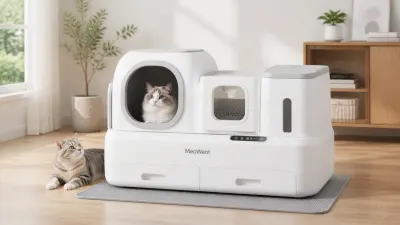
MeoWant Self-Cleaning Litter Box for Multi-Cat Homes
Discover how MeoWant's self-cleaning litter box solves the biggest pain point for multi-cat owners. Learn about smart features, setup, maintenance, and whether it's worth the investment.
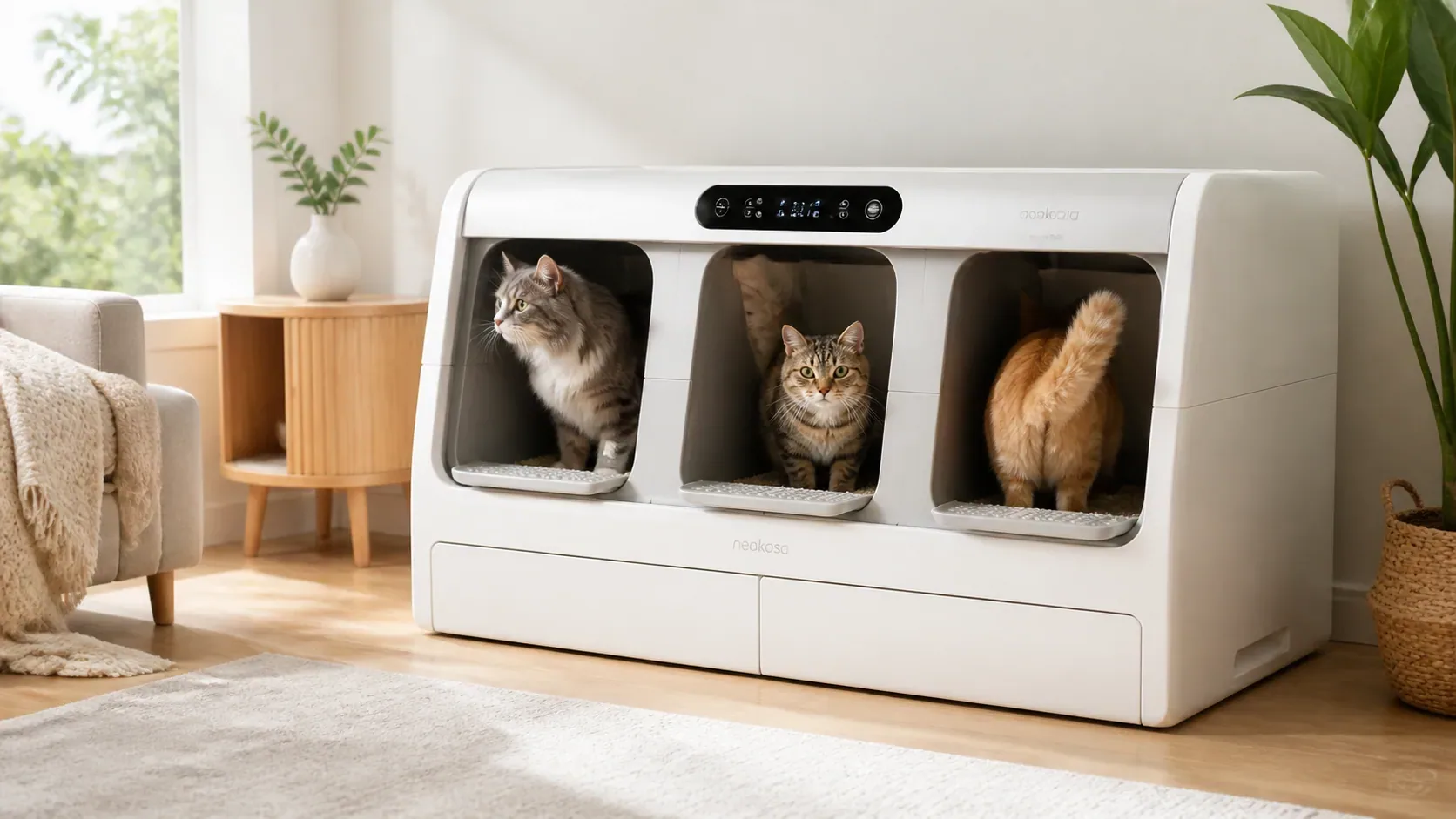
If you're managing multiple cats, you're scooping litter boxes anywhere from 2-4 times daily—that's roughly 1,000 scoops per year. The repetitive cycle drains time, energy, and patience. What started as a simple household responsibility has become one of the most universally dreaded aspects of cat ownership, especially when you're juggling three or more felines under one roof.
Automated litter boxes have transformed dramatically over the past five years, evolving from novelty gadgets into genuinely practical solutions for busy cat parents, multi-cat households, and seniors. The technology has matured enough that it now addresses the real pain points: overwhelming odor, constant time commitment, and the hygiene concerns that make litter maintenance feel like an endless battle.
Explore the MeoWant Self Cleaning Litter Box to see how it can transform your multi-cat household.
The Multi-Cat Problem That MeoWant Actually Solves
Why traditional litter boxes become unsustainable with 3+ cats
Managing three or more cats with traditional litter boxes creates a cascading maintenance nightmare. The general rule suggests one box per cat plus one extra, meaning a three-cat household needs at minimum four separate boxes. Each box demands daily scooping—sometimes twice daily—to maintain any semblance of cleanliness. You're not just scooping; you're strategically placing boxes throughout your home, managing litter preferences, and constantly battling the spatial footprint these boxes consume.
The odor escalation problem in multi-cat homes
Multiple cats generate exponential odor problems, not linear ones. One cat's waste produces manageable smell; two cats create noticeable odor; three or more cats can permeate your entire home with ammonia and decay. Even homes that are cleaned daily develop that distinctive litter box smell that guests notice immediately. The more cats you have, the more aggressively odor compounds throughout your space.
How litter box avoidance and behavioral issues emerge from poor maintenance
Cats are fastidious creatures. When a litter box falls below their cleanliness standards, they'll find alternatives—your carpet, your bed, your laundry basket. Behavioral issues like inappropriate elimination often stem directly from litter box dissatisfaction. In multi-cat homes, dominant cats may monopolize boxes while subordinate cats avoid them entirely, creating stress and territorial conflicts. Poor maintenance doesn't just smell bad; it fractures your cat's behavioral health and trust in their environment.
The time cost of manual scooping across multiple boxes
Calculate your actual scooping time. If you spend 10 minutes daily across four boxes, that's 3,650 minutes annually—over 60 hours per year dedicated to litter maintenance. Multiply that across a cat's 15+ year lifespan, and you're investing nearly 1,000 hours of your finite time on this single task. For busy professionals, parents, and anyone with limited mobility, that time represents a genuine quality-of-life issue.
How MeoWant's Self-Cleaning System Works Behind the Scenes
Rotating versus raking mechanisms explained
MeoWant's self-cleaning system employs a raking mechanism that periodically cycles through the litter bed, breaking up clumps and moving waste into a sealed disposal drawer below. Unlike rotating drum systems that can be disorienting to cats and occasionally problematic with litter consistency, the raking approach mimics natural digging behavior more closely. The mechanism operates on a timer, activating several minutes after a cat exits the box, which means the system works while your cat is elsewhere rather than immediately under their paws.
The waste drawer and sealed disposal system
The waste drawer features a sealed compartment that contains odor effectively. Rather than exposing accumulated waste to open air, the sealed design traps smell and moisture, significantly reducing the ammonia cloud that traditional boxes create. The drawer empties easily—you simply remove it, dispose of the contents, and replace it. This design element means you're handling waste significantly less frequently than with manual scooping, though you're still managing a sealed container rather than eliminating the task entirely.
How safety sensors detect cats and pause operation
Weight sensors built into the box detect when a cat is actively using it and pause the cleaning cycle to prevent accidental contact with the raking mechanism. This safety feature is critical; no cat should experience a moving mechanism while in the box. The sensors are calibrated to distinguish between an actual cat and vibrations or accidental triggers, though sensor sensitivity occasionally requires recalibration if performance drifts.
App-based monitoring and cycle tracking features
The mobile app provides real-time visibility into litter box activity, cleaning cycles, and maintenance schedules. You can track which cats use the box and when, review cleaning history, receive alerts about waste drawer capacity, and receive maintenance notifications. This connectivity transforms your relationship with litter maintenance from blind routine into informed oversight, allowing you to anticipate problems before they escalate.
Smart Features That Justify the Premium Price Tag
Mobile app connectivity and real-time notifications
The app delivers notifications when the waste drawer approaches full capacity, when cleaning cycles complete abnormally, and when maintenance is needed. This removes the guesswork from household management. You're not checking the box wondering if it needs emptying; the system tells you exactly when action is required.
Usage tracking for individual cats and cleaning cycle customization
Individual cat tracking provides valuable health insights. Changes in frequency or duration of box usage often signal urinary tract infections, digestive issues, or behavioral stress. Customizable cleaning cycles allow you to adjust frequency based on your specific household dynamics—more frequent cycles for heavily used boxes, less frequent for secondary boxes.
Remote monitoring when you're away from home
Extended time away from home creates anxiety for many cat owners about litter box maintenance. With remote monitoring, you can verify that the box is functioning properly, check usage patterns, and receive alerts about potential problems even when you're across the country. This connectivity provides genuine peace of mind beyond what traditional boxes offer.
Integration with smart home systems and maintenance alerts
The system can integrate with broader smart home ecosystems, creating automated routines and consolidated alerts across your connected devices. Maintenance alerts remind you about component replacement schedules and recommended cleaning intervals, extending system lifespan and preventing performance degradation.
Installation and Space Considerations for Your Home
Footprint size and room placement requirements
MeoWant's self-cleaning litter box occupies significantly more floor space than traditional boxes—roughly 24-28 inches in length and 20-24 inches in width, depending on the model. You'll need a dedicated space that can accommodate this larger footprint while allowing cats comfortable entry and exit. Unlike traditional boxes that can squeeze into corners, this system requires thoughtful placement. Many users locate it in utility rooms, garages, or laundry areas where the footprint feels less intrusive.
Electrical outlet and Wi-Fi connectivity needs
The system requires a nearby electrical outlet for power and Wi-Fi connectivity for app functionality. If your preferred placement lacks either, you'll need to run extension cords or strengthen your Wi-Fi signal with a mesh system. Neither presents insurmountable obstacles, but both require planning during installation.
Ventilation and odor management setup
While the sealed waste drawer contains odor effectively, the system still benefits from ambient air circulation. Placement in a well-ventilated area or near a window significantly reduces any residual litter odor. Some users add small ventilation fans or open nearby windows during and after cleaning cycles for maximum odor control.
Litter capacity and waste drawer emptying frequency
The waste drawer capacity varies by model but typically accommodates 5-10 days of usage for a multi-cat household, depending on cat count and litter consumption. You'll need to establish a routine for drawer emptying—most owners target a weekly schedule. This requirement means the system isn't completely hands-off; you're still managing waste, just on a dramatically reduced schedule.
The Maintenance Reality Check You Need to Hear
Weekly cleaning tasks and component removal
The system requires weekly maintenance that includes removing and cleaning the raking mechanism, inspecting the litter bed, and ensuring sensors are functioning properly. These tasks take roughly 15-20 minutes weekly and prevent performance degradation. Skipping maintenance will eventually cause sensor misalignment, clump accumulation, or mechanism jamming.
Litter type restrictions and clump management
MeoWant requires clumping litter specifically formulated for self-cleaning boxes. Standard clumping litter often produces inconsistent clump sizes that either don't rake properly or create fine dust accumulation. You'll need to budget for compatible litter purchases, which typically costs slightly more than standard options. Non-compliant litter will compromise system performance regardless of maintenance quality.
Sensor calibration and troubleshooting procedures
Sensors occasionally require recalibration if they develop sensitivity drift, particularly after several months of continuous use. The app guides you through calibration procedures, but some troubleshooting demands patience. Common issues include false triggering, delayed raking initiation, or missed cycles—most resolve through recalibration or component cleaning.
Replacement parts and long-term costs
Over time, you'll replace components: the raking blade dullifies, seals weaken, sensors drift. Replacement parts are available through MeoWant but add to operational costs. Budget roughly $50-100 annually for component replacement beyond regular litter purchases and electricity consumption.
Real Cost Analysis: Is It Worth the Investment?
Upfront purchase price versus ongoing savings
The initial investment ranges from $200-500 depending on model and features. Monthly ongoing costs include compatible litter ($15-25), electricity ($5-10), and occasional replacement parts ($5-10). Annually, you're investing roughly $300-700 total when you account for litter, electricity, and parts. Traditional multi-cat setups cost roughly $100-150 annually in litter and box replacement, making the automated system's premium genuine.
Time savings converted to monetary value
If you reclaim 250+ hours annually that you'd spend scooping, and you value your time at even $15/hour, that represents $3,750 in reclaimed time value. For hourly workers, consultants, or anyone billing time, this calculation becomes even more compelling. For others, the time reclamation represents quality-of-life improvement rather than direct financial gain.
Reduced vet bills from improved litter box hygiene
Cleaner litter boxes correlate with fewer urinary tract infections, reduced behavioral issues, and earlier detection of health problems through usage tracking. While preventing even one UTI ($200-400 vet bill) effectively pays for a month of system operation, quantifying this benefit precisely remains difficult.
Electricity usage and operational expenses
The system consumes modest electricity—roughly $5-10 monthly depending on frequency settings and model efficiency. This cost is negligible compared to time savings but shouldn't be ignored when calculating true investment.
Who Should Actually Buy This (And Who Shouldn't)
Best-fit scenarios: multi-cat households, busy professionals, seniors
The system delivers maximum value for households with three or more cats, professionals with demanding schedules, and seniors with mobility limitations. If you're managing multiple boxes and desperately wishing for fewer scooping sessions, this system addresses your exact problem. Parents of young children and individuals with chronic illness or disability who find bending and scooping painful also benefit substantially.
Household size thresholds where it makes financial sense
Single or two-cat households often find the premium cost harder to justify, particularly if their cats are well-behaved and litter maintenance remains manageable. Three-cat households represent the minimum threshold where time and odor problems typically become severe enough to justify investment. Four or more cats almost universally benefit from automation.
Cat age, size, and health considerations
Senior cats sometimes struggle with the box's larger footprint or raking mechanism noise. Very large cats or cats with mobility issues may need the traditional box setup. Conversely, cats with health issues that produce frequent elimination benefit from cleaner boxes and usage tracking. Evaluate your specific cat's physical capabilities and health profile before committing.
Technical comfort level and app dependency
The system requires basic technical competency for app setup and occasional troubleshooting. If you're uncomfortable with WiFi connectivity, mobile app navigation, or sensor recalibration, the system may frustrate you. Conversely, if you're already embedded in smart home technology, the MeoWant system feels intuitive and natural.
Comparing MeoWant to Other Automated Alternatives
MeoWant versus Litter Robot features and pricing
The Litter Robot employs a rotating drum mechanism and typically costs $300-400. It offers similar app functionality and safety sensors but uses different cleaning architecture. Litter Robot generally has a larger user base and more abundant third-party reviews. MeoWant's raking mechanism feels more natural to some cats and produces less noise, though both systems perform effectively.
MeoWant versus Enabot and budget-friendly options
Budget alternatives like Enabot ($150-250) offer basic automation without app connectivity or smart features. They're sufficient for single or two-cat households willing to sacrifice convenience features for lower cost. Multi-cat households typically find budget options underwhelming due to cleaning frequency limitations and lack of usage tracking.
App functionality and user interface differences
MeoWant's app offers detailed tracking, cycle customization, and integration with smart home systems. Litter Robot's app provides similar core features with slightly different interface design. Budget alternatives either lack apps entirely or offer minimal functionality. If smart home integration matters to you, MeoWant and Litter Robot significantly outperform budget competitors.
Durability and warranty comparisons
MeoWant typically offers 1-2 year warranties with accessible customer support. Litter Robot offers comparable warranties with extensive community resources. Actual durability depends heavily on maintenance quality and litter type compliance. Properly maintained systems from either manufacturer last 4-6 years before significant component replacement becomes necessary.
The Honest Downsides and Potential Deal-Breakers
Higher upfront investment and financing options
The $200-500 price point presents genuine financial friction for many households. Some retailers offer payment plans or financing options that spread costs across months, making the purchase more accessible. However, the fundamental reality remains that you're investing substantially more upfront than traditional boxes.
Larger physical footprint limitations
If your home lacks adequate space for a box this size, or if aesthetics matter significantly in your living space, the larger footprint becomes a deal-breaker. Some users find the box visually intrusive despite functional benefits.
Litter type restrictions and compatibility issues
You can't use your preferred litter brand unless it's specifically formulated for self-cleaning boxes. Non-compliant litter will result in poor performance, sensor issues, and system jamming. This restriction eliminates flexibility and may require purchasing unfamiliar litter brands.
Occasional clumping failures and sensor sensitivity
Despite careful maintenance and appropriate litter, clumping occasionally fails if humidity levels fluctuate or litter formulation changes slightly between bags. Sensor sensitivity sometimes drifts, causing false triggers or missed cleaning cycles. These aren't catastrophic problems, but they're real maintenance realities that require troubleshooting patience.
Making the Transition Smooth for Your Cats
Cat behavior changes during the adjustment period
Cats are creatures of habit who find change unsettling. The new box's size, shape, and operational noise may initially alarm them. Some cats take days to investigate; others require a week or more for full acceptance. During transition, maintain their traditional boxes alongside the new system so they have familiar alternatives.
Introducing multiple cats to the same system
Multiple cats often develop territorial preferences about litter boxes. One cat may enthusiastically embrace the new system while others avoid it indefinitely. Gradual introduction—leaving the new box unpowered initially, then powering it with inactive cycles, then gradually activating full operation—helps cats acclimate without stress.
Backup litter box strategy during transition
Never remove traditional boxes immediately upon installing the automated system. Maintain at least one familiar traditional box throughout the transition period and beyond. If the automated system ever malfunctions, you need immediate backup options to prevent inappropriate elimination and behavioral stress.
Timeline expectations for full acceptance
Most cats require 2-4 weeks to fully embrace the new system. Some adapt within days; others require months of coexistence with the traditional box before trust develops. Patience during this period prevents behavioral setbacks and helps cats associate the new box with positive experiences rather than stress.
Reclaim Your Time and Transform Your Multi-Cat Home
The MeoWant Self Cleaning Litter Box isn't just another pet gadget—it's a legitimate solution to one of cat ownership's most persistent frustrations. For multi-cat households especially, the convenience factor alone can justify the investment. You'll reclaim roughly 250+ hours per year that you'd otherwise spend scooping, and you'll experience noticeably fresher-smelling spaces almost immediately.
The system requires some initial setup, occasional maintenance, and the right type of litter to perform at its best. But once you've moved past that learning curve, the daily relief is undeniable. Your mornings will feel different when you're not standing over a litter box with a scoop in your hand. Your home will smell better. Your cats will have consistently cleaner facilities. Your time will expand in small but meaningful ways.
If you're managing three or more cats, spend significant time away from home, or simply can't face another year of manual scooping, this technology delivers real value. Start by assessing your household's specific needs, checking your available space, and reading owner reviews in your exact situation.