These 7 Tips Help You Find the Best AC for Small Apartment
Find the best AC for small apartment living. Compare window, portable, and mini split units by cooling power, noise, installation, and cost before you buy.
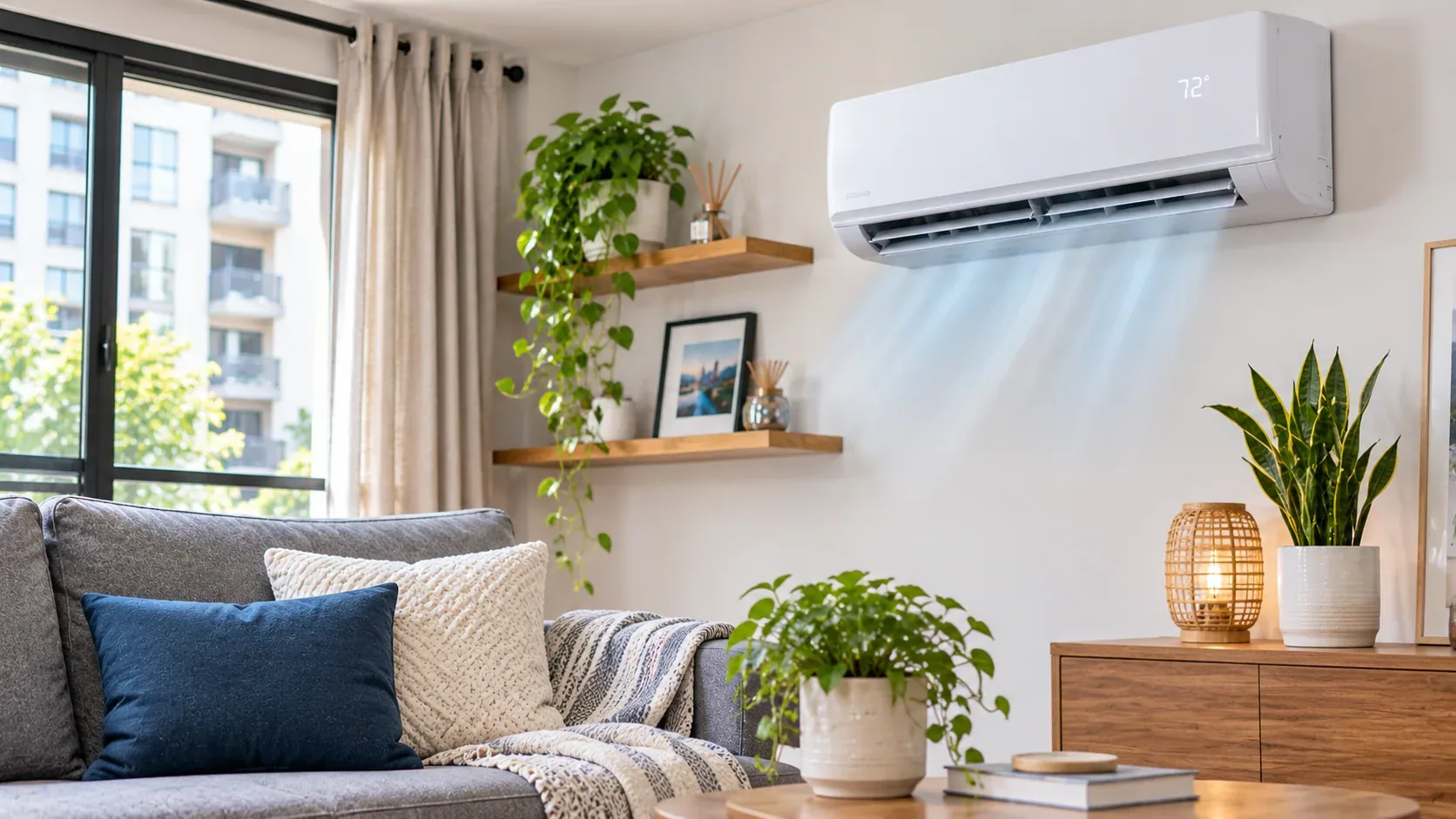
Living in a small apartment has its perks, but keeping it cool during summer can be tricky. Limited floor space, warm bedrooms, and rising electricity bills can make choosing an air conditioner feel frustrating.
Finding the best AC for small apartment living starts with understanding your space, budget, and cooling needs. A compact window unit might work for one room, while a ductless system could be a better long-term choice.
Before buying, it helps to compare cooling power, energy use, noise levels, and installation requirements.
You can also explore different home cooling systems to understand the features available in modern air conditioners.
What Makes the Best AC for Small Apartment Living?
The right air conditioner for small apartment spaces should cool effectively without taking up unnecessary room or creating excessive noise.
However, the right choice depends on your apartment's layout and installation restrictions.
For example, a studio apartment with an accessible window may work well with a window unit. A larger apartment with separate bedrooms might benefit from multiple cooling zones.
Three common options are:
- Window air conditioners: Usually affordable, compact, and suitable for cooling individual rooms.
- Portable air conditioners: Can be moved between rooms, although they require a window exhaust hose.
- Ductless mini splits: Wall-mounted indoor units connected to outdoor equipment, providing cooling without traditional ductwork.
Each option has advantages and limitations. The goal is to find one that matches your space rather than paying for features you won't use.
1. Choose the Right Cooling Capacity
Cooling capacity is one of the first things to check when buying an air conditioner.
It's measured in British Thermal Units, or BTUs. A higher BTU rating generally means greater cooling capacity.
However, bigger doesn't always mean better.
An oversized unit may cool the room too quickly without removing enough humidity. An undersized unit may run constantly while struggling to maintain a comfortable temperature.
What AC size does your apartment need?
This simple apartment AC size guide provides approximate starting points for room air conditioners.
| Room size | Approximate cooling capacity |
|---|---|
| 100–150 sq. ft. | 5,000 BTU |
| 150–250 sq. ft. | 6,000 BTU |
| 250–300 sq. ft. | 7,000 BTU |
| 300–350 sq. ft. | 8,000 BTU |
| 350–400 sq. ft. | 9,000 BTU |
| 400–450 sq. ft. | 10,000 BTU |
| 450–550 sq. ft. | 12,000 BTU |
These are general room-air-conditioner estimates. Ductless systems require equipment-specific sizing calculations.
Ceiling height, insulation, sunlight, windows, and the number of people using the space can affect the required capacity.
If you're researching ductless systems, COZEWARE lists a 9,000 BTU Visio model rated for spaces up to approximately 450 square feet.
That figure is a manufacturer estimate, not a guarantee for every apartment.
You can review available BTU capacities and equipment specifications before deciding which size fits your room.
2. Compare Window, Portable, and Mini Split Systems
One of the biggest buying decisions involves choosing the type of air conditioner.
Understanding window AC vs portable AC differences can help you avoid unnecessary expenses.
Window air conditioners
Window units are often practical for renters who need affordable cooling.
They fit into compatible windows and generally cost less to purchase than ductless systems.
However, they may block part of your window and require secure mounting.
Portable air conditioners
Portable units are useful when installing a window air conditioner isn't possible.
They sit on the floor and use an exhaust hose to release hot air outdoors.
Their main drawback is efficiency. Many single-hose models use additional energy compared with similarly sized window units.
They also occupy valuable floor space.
Ductless mini split systems
A mini split air conditioner uses a wall-mounted indoor unit and an outdoor compressor.
These systems can provide efficient, relatively quiet cooling without taking up floor space.
Some models also provide heating.
However, installation generally requires professional work, wall openings, outdoor equipment placement, and landlord or building approval.
Which option is better?
| AC type | Main advantage | Main drawback | Suitable for |
|---|---|---|---|
| Window AC | Lower upfront cost | Requires compatible window | Budget-conscious renters |
| Portable AC | Flexible placement | Uses floor space and an exhaust hose | Apartments with window restrictions |
| Mini split | Efficient, quiet operation | Higher installation costs | Owners or renters with installation approval |
You can compare ductless cooling features if you're interested in a permanent heating and cooling system.
3. Check Energy Efficiency Before Buying
An energy efficient air conditioner can help manage electricity costs, especially during hot months.
However, efficiency ratings vary depending on the type of equipment.
What do CEER and SEER2 mean?
CEER, or Combined Energy Efficiency Ratio, is commonly used for window and portable room air conditioners.
SEER2, or Seasonal Energy Efficiency Ratio 2, measures seasonal cooling efficiency for systems such as ductless mini splits.
Generally, higher ratings within the same equipment category indicate better energy efficiency.
However, CEER and SEER2 use different testing methods, so their numbers shouldn't be compared directly.
Can a mini split reduce electricity costs?
An efficient mini split may use less electricity than certain older or less efficient cooling systems.
For example, COZEWARE lists 18 SEER2 and 20 SEER2 ratings across selected Visio models.
However, actual electricity costs depend on your local utility rates, apartment insulation, outdoor temperatures, thermostat settings, and daily usage.
Before purchasing, compare efficiency ratings and estimated annual energy consumption whenever that information is available.
You can check published efficiency ratings for specific ductless models.
4. Pay Attention to Noise Levels
A loud air conditioner can become annoying when you're trying to sleep, work, or watch television.
That's especially noticeable in small apartments, where your bedroom and living area may share the same space.
If you're shopping for a quiet air conditioner for bedroom use, check the manufacturer's published noise ratings.
How quiet should your AC be?
Noise is measured in decibels, or dB.
For indoor comfort, air conditioners operating around 25–40 dB at their quietest settings may be suitable for noise-sensitive spaces.
However, ratings depend on testing conditions and fan speeds.
A unit advertised at 28 dB may become noticeably louder when running at maximum capacity.
What features help reduce noise?
Look for:
- Adjustable fan speeds.
- Sleep or quiet operating modes.
- Inverter compressors.
- Proper installation and vibration control.
- Clearly published indoor noise ratings.
Wall-mounted mini splits can be relatively quiet because their compressors are located outdoors.
Still, remember that outdoor equipment produces noise, which may matter if your apartment building has restrictions.
5. Review Installation Requirements
Before purchasing an air conditioner, make sure you're allowed to install it.
Apartment buildings often have rules about exterior equipment, window modifications, and wall openings.
What should renters check?
Ask your landlord or building manager about:
- Window AC installation restrictions.
- Permission to drill through exterior walls.
- Outdoor compressor placement.
- Available electrical connections.
- Professional installation requirements.
- Responsibility for repairs and removal.
A portable unit may be the simplest choice when permanent modifications aren't allowed.
Window units can also work when your building permits them.
For mini splits, professional installation is generally recommended because refrigerant handling and electrical connections require specialized skills.
COZEWARE publishes installation guides for its ductless systems, including information about equipment placement and connection lengths.
You can read the installation information to understand the work involved before purchasing.
6. Compare Purchase Prices and Long-Term Costs
The cheapest air conditioner isn't always the least expensive to own.
Purchase price, installation, electricity use, maintenance, and potential repairs all affect your total spending.
How much do different air conditioners cost?
These broad price ranges are planning estimates for typical U.S. residential equipment, not live retailer quotes.
| AC type | Approximate equipment price | Installation considerations |
|---|---|---|
| Window AC | $150–$700 | Often simple, but secure mounting may require assistance |
| Portable AC | $250–$800 | Usually minimal installation |
| Single-zone mini split | $500–$2,000+ | Professional installation can add substantial costs |
Prices vary by capacity, brand, features, and retailer.
For a specific example, the manufacturer's online catalog has listed its Visio 9,000 BTU mini split around $400–$440 during promotional periods.
That price represents equipment only and doesn't include professional installation.
What about maintenance?
Window and portable air conditioners typically require regular filter cleaning and occasional drainage or coil maintenance.
Mini splits also need filter cleaning and periodic professional servicing.
Before buying, check warranty coverage, replacement part availability, and service requirements.
You can review current equipment pricing and compare warranty information before calculating your total budget.
7. Look for Features That Make Daily Use Easier
Modern air conditioners come with different convenience features.
Some are genuinely helpful in small apartments, while others may not be necessary.
Which features are worth having?
Programmable timers: Allow you to schedule cooling around your routine.
Sleep mode: May adjust temperature and fan speed during nighttime use.
Remote controls: Let you change settings without getting up.
Wi-Fi controls: Allow compatible units to be managed through smartphone apps.
Heating capability: Useful if you want one system for summer cooling and winter heating.
Washable filters: Can simplify routine maintenance.
Prioritize features you'll actually use rather than paying extra for every available setting.
If you're considering smart controls, verify that the specific model supports the functions you need.
Which Air Conditioner Is Right for Your Small Apartment?
The best choice depends on your living situation.
If you're renting and want affordable cooling for one room, a window air conditioner may be the most practical option.
If your building restricts window installations, a portable unit may work, although it can occupy floor space and use additional electricity.
If you own your apartment or have permission for permanent installation, a ductless mini split may provide efficient cooling, quieter operation, and heating capability.
Before buying, measure your space, confirm installation rules, compare energy ratings, and calculate the full cost.
If a ductless system fits your needs, you can explore available models and their specifications before making your decision.
A comfortable apartment starts with choosing an air conditioner that fits your room, budget, and everyday routine.